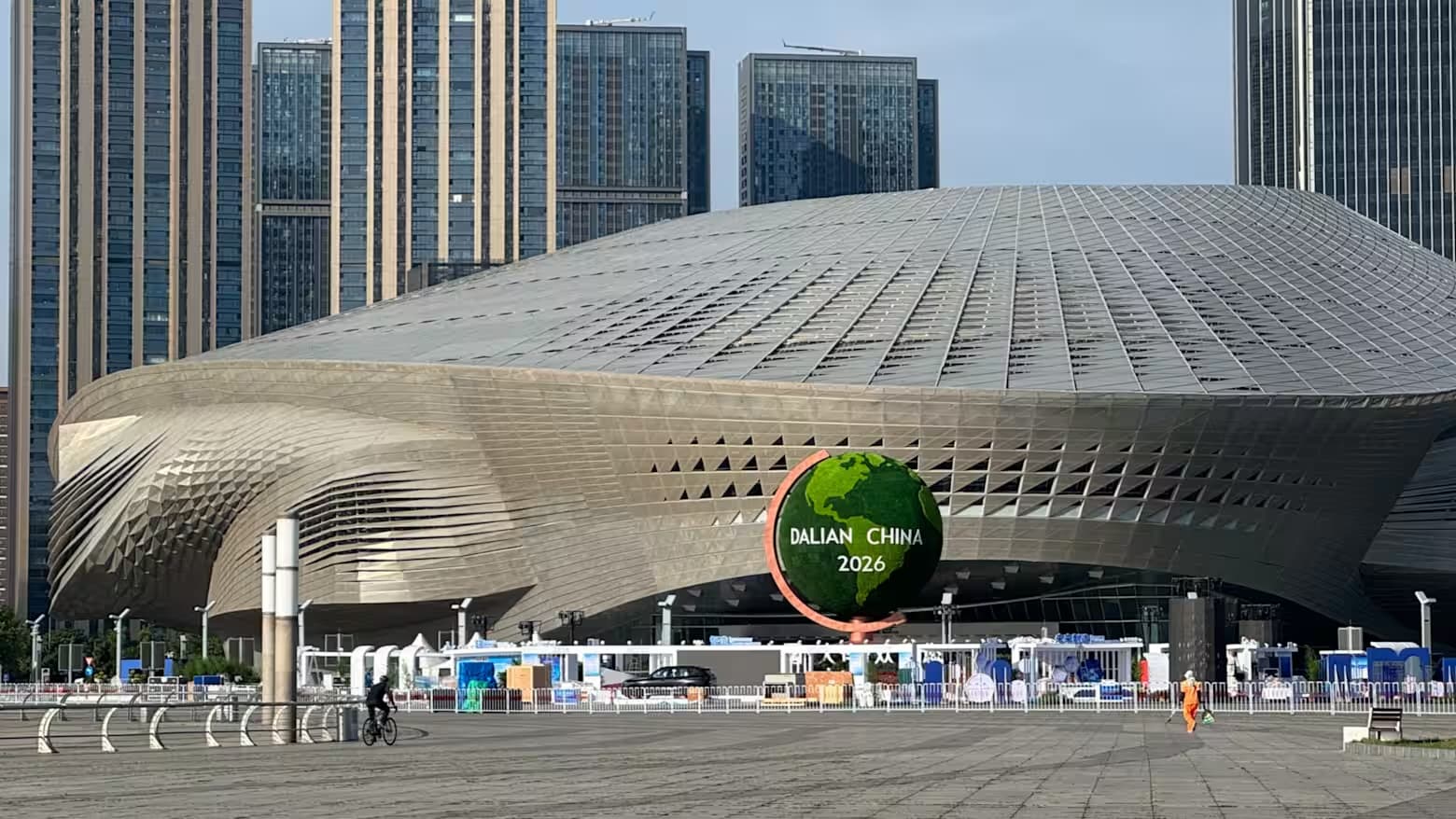
When the global business elite gathered in Dalian in late June for the summer edition of the World Economic Forum, the setting carried a message its hosts may not have intended. This is a city that once aspired to be a Hong Kong of the north, a free and outward looking port that would draw capital and talent from across Asia and beyond. Standing amid its wide plazas and gleaming towers, it is worth asking why that ambition stalled, because the answer speaks directly to the choices facing both Beijing and Tokyo today.
Dalian sits at the tip of the Liaodong peninsula, a deep water harbor that never freezes, and geography made it valuable long before politics did. Over the last century and a half it has passed through Russian and Japanese hands, each foreign ruler leaving behind boulevards, rail links, and the bones of a trading city built to face the sea rather than the interior. That layered past gave Dalian something unusual for a Chinese city, a habit of looking outward and a comfort with foreign commerce.
The years when the gamble paid off
The city's modern boom came when it leaned into that inheritance. In the reform decades it marketed itself as clean, green, and open for business, courting Japanese and Korean manufacturers and building one of China's first serious software and outsourcing industries. Companies came because the place felt easy to work in, and because officials seemed to understand that their job was to clear the road rather than to steer the car. For a stretch, Dalian looked like proof that a Chinese city could grow rich by trusting the market.
That period rewarded openness in a very direct way. Foreign firms brought not only factories but management practices, training, and links into global supply chains, and a generation of local workers learned skills that no central plan had thought to provide. The prosperity was real precisely because it was not dictated. It grew out of thousands of private decisions about where to invest, whom to hire, and what to build.
Why the shine came off
The momentum did not last, and the reasons are instructive. As the state reasserted its role across the Chinese economy, the room for the kind of freewheeling, market led growth that had lifted Dalian narrowed. Grand projects and official targets increasingly took the place of organic demand, and some of the city's boldest bets aged into monuments rather than engines. The gateway began to feel more like a showcase, impressive to visit but harder to build a durable economy upon.
A city grows fastest when its leaders clear the road, and slows when they insist on steering the car.
Geopolitics did the rest. As relations between China and Japan cooled, the cross border investment and easy exchange that had powered Dalian's rise became harder to sustain. A city whose fortune was built on being a bridge is especially exposed when the two shores decide to pull apart. The very openness that made Dalian thrive left it vulnerable once openness fell out of fashion.
The lesson for two capitals
For Beijing, the story is a quiet argument against the instinct to manage growth from the center. Dalian did best when the government trusted markets and worst when it tried to command outcomes, and the pattern is not unique to one port. The engine of lasting prosperity has repeatedly turned out to be private enterprise given room to breathe, not directives issued from above. A country that forgets this trades dynamism for control and calls the loss stability.
Tokyo should not read the tale as someone else's problem. Japan has its own long habit of steering the economy through ministries and industrial strategy, and its own temptation to answer stagnation with more official guidance rather than less. The Dalian lesson cuts both ways across the sea. Whether the label above the door reads socialist or capitalist, an economy tends to reward the same things, open markets, secure property, and a state confident enough to step back.
A bridge worth rebuilding
There is a second lesson layered beneath the first, and it is about the two countries together. Dalian flourished as a meeting point between China and Japan, and its slowdown tracks the chill in their relationship. That link suggests the gains from cooperation were never abstract. They showed up in jobs, in factories, and in a city that felt alive with foreign energy. Letting that bridge decay has a measurable cost, paid first in places like this.
Rebuilding it would not require either capital to abandon its interests, only to remember what open exchange once delivered. The port that dreamed of becoming a Hong Kong of the north still has the harbor, the history, and the location that made the dream plausible. What it needs is the confidence, in Beijing and in Tokyo alike, that markets and openness are worth betting on again. The forum has moved on, but the question it left behind lingers over the water.