Two neighbors with a long and painful history are quietly building one of Asia's most consequential security partnerships. Japan and South Korea are stepping up cooperation on defense equipment and technology, a sign of how far relations have warmed and how seriously both governments now take the threats around them.
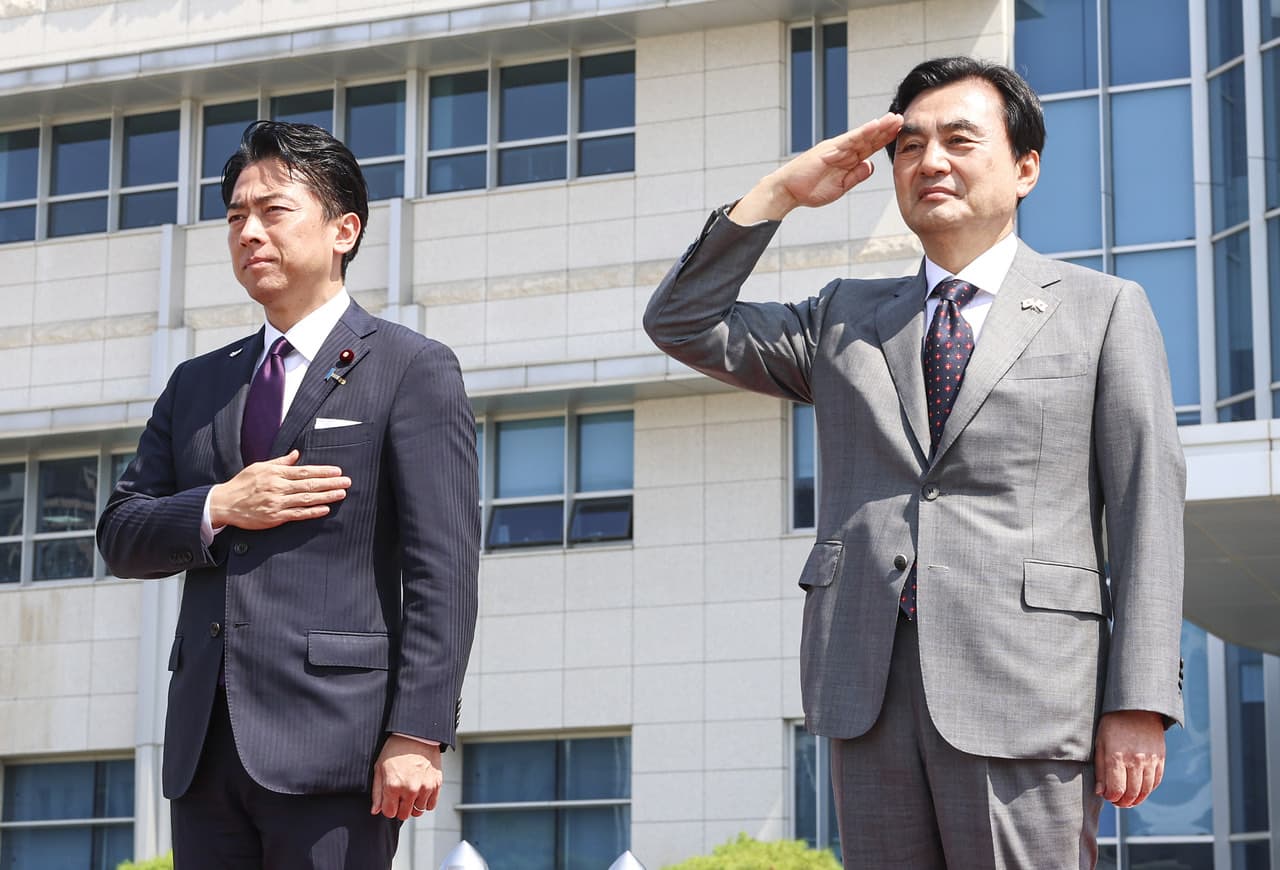
The latest push came in Seoul, where Japanese Defense Minister Shinjiro Koizumi met his South Korean counterpart, Ahn Gyu-back. It was their fourth face to face meeting since late 2025, a cadence that would have been unthinkable not long ago given the friction that has so often defined ties between Tokyo and Seoul.
From symbolism to substance
The meeting produced more than warm words. The two sides advanced talks on cooperation in defense equipment and technology, building on Japan's decision earlier in 2026 to revise its rules on transferring such gear abroad. That change opened the door to deals that were previously off the table.
They also agreed to resume joint search and rescue exercises for the first time in about nine years, and to open a new channel of discussion on artificial intelligence between their defense authorities. Even the ceremonial side is expanding, with plans to broaden exchanges between the two countries' aerobatic teams, Japan's Blue Impulse and South Korea's Black Eagles.
A relationship that was anything but easy
What makes this notable is the history behind it. Cooperation between Tokyo and Seoul has long been complicated by the legacy of Japan's wartime past, an issue that still carries deep emotional weight in South Korea. For years that history limited how close the two militaries could publicly become, even as they shared the same allies and many of the same worries.
The current thaw does not erase those sensitivities. South Korean leaders have acknowledged that defense agreements with Japan remain politically delicate at home. The fact that the two are pressing ahead anyway, including the first reciprocal defense ministerial visits in more than two decades, shows how much the strategic calculus has shifted.
What is driving them together
The answer lies in the region around them. Both countries are watching an increasingly assertive China, a heavily armed North Korea, and growing military coordination between Beijing and Moscow. Koizumi pointed to a recent joint Chinese and Russian flight near Japan as something that could only be read as a show of force aimed at his country.
Shared threats have a way of softening old grievances. With the United States as the common anchor of their security, Japan and South Korea increasingly see value in working directly with each other rather than only through Washington. A possible agreement on logistical support, allowing their forces to supply one another, would deepen that practical link.
Why it matters
Closer defense ties between Asia's two leading democracies change the math for any potential adversary. Coordination on equipment, technology, and exercises makes both militaries more capable and harder to divide, and it strengthens the wider network of US led alliances in the region.
The progress is real but not guaranteed. Domestic politics on both sides can still slow the pace, and the history that has tripped up past efforts has not disappeared. For now, though, the direction is clear. Faced with a more dangerous neighborhood, Tokyo and Seoul have decided that working together is worth the discomfort of their shared past.