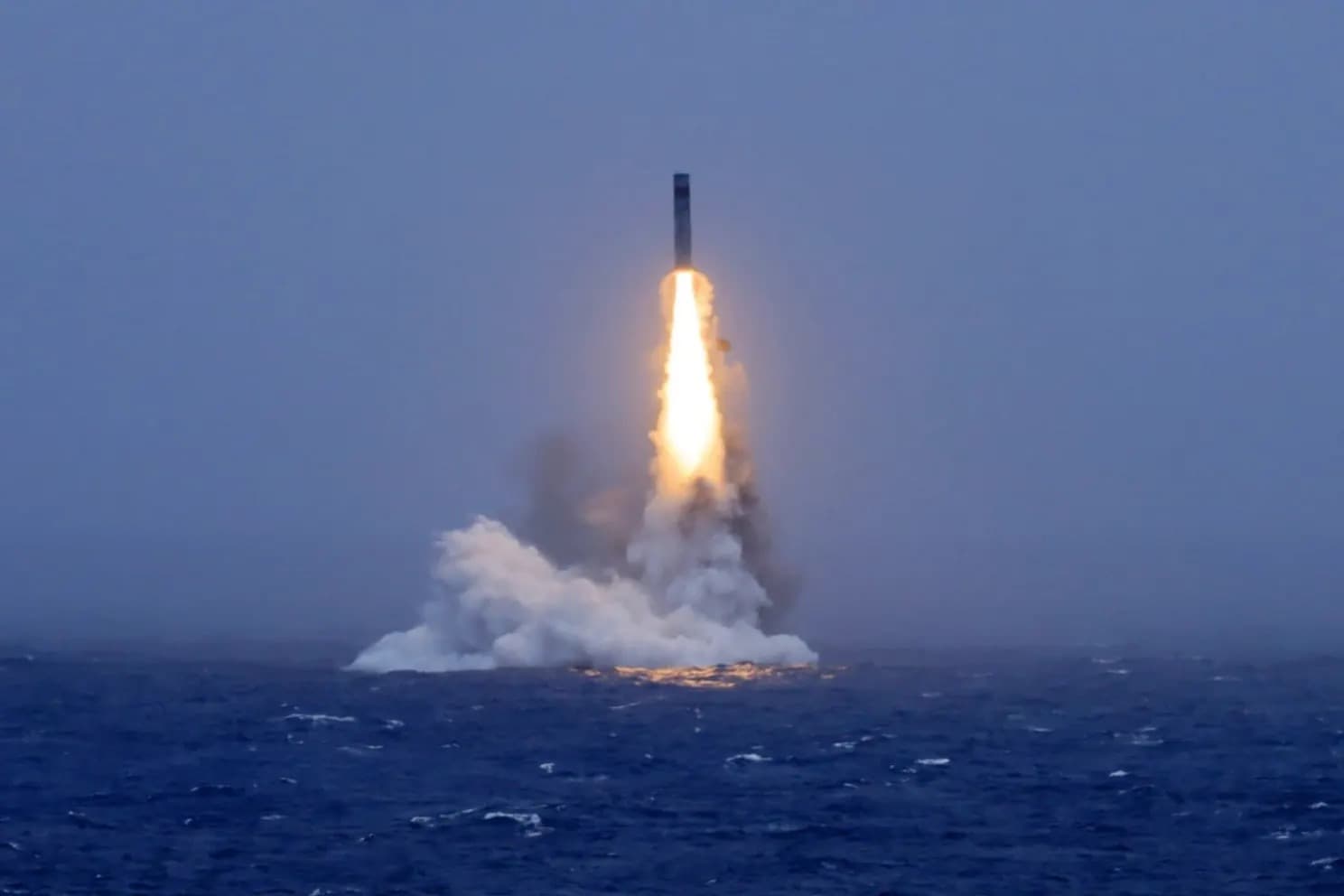
For most of its history as a nuclear power, China kept its arsenal small, land bound, and deliberately opaque. The doctrine was minimal deterrence, the promise being that a modest force held back from the front line was enough to make any adversary think twice. That era is drawing to a close. The country is building warheads at a pace not seen from any nuclear state in decades, and much of the new capability is heading out to sea.
Western assessments now put China's stockpile at more than 600 warheads, with the Pentagon projecting the total could pass 1,000 before the end of the decade. The expansion is visible from space in the fields of new missile silos dug across the western deserts, and it is audible in the steady drumbeat of tests, patrols, and shipyard activity along the coast. What was once a cautious, second tier arsenal is turning into a full spectrum force built for survivability.
The sea-based leg matures
The most consequential change is happening underwater. A reliable submarine launched deterrent has long been the hardest leg of the nuclear triad to master, and for years China's effort fell short. Its early missile boats were noisy, easy to track, and armed with weapons that could not reach the continental United States without sailing into exposed waters. An arsenal that cannot hide is an arsenal that invites a first strike.
That calculus is shifting. China now operates a fleet of Type 094 missile submarines, and their newer weapon, the JL-3, is credited with a range long enough to threaten targets across the Pacific from patrol areas much closer to home. For the first time, Beijing can plausibly claim a continuous at sea deterrent, meaning at least one armed boat on station at all times. A retaliatory force that can stay hidden changes the entire logic of a crisis.
A quieter boat on the way
The current submarines remain the weak point. Analysts widely regard them as loud by modern standards, which makes them vulnerable to the anti submarine warfare networks fielded by the United States and its allies. Beijing knows this, and the answer is already taking shape in the form of a next generation boat, often referred to as the Type 096, expected to be substantially quieter and to carry longer range missiles.
A submarine that cannot be found is the ultimate insurance policy, and that is precisely what Beijing is now trying to buy.
If the new class delivers on its promise, China would hold a survivable second strike capability that is genuinely difficult to neutralize. That prospect is what worries planners in Washington and Tokyo far more than any single missile test. It moves China from a country that could absorb a first strike and hope to respond, to one that can be confident of responding.
Protecting the boats
Hardware is only half the story. A missile submarine is only as useful as the space it has to operate safely, and China has been shaping the waters off its southern coast into a protected sanctuary for exactly that purpose. The submarine base on Hainan Island sits at the edge of the South China Sea, a body of water Beijing has spent a decade fortifying with artificial islands, radars, and patrol forces.
The strategy echoes a Cold War idea, the creation of a defended bastion where missile boats can hide under the protection of friendly ships, aircraft, and sensors. Read through that lens, the militarization of the South China Sea looks less like a series of local disputes and more like the outer wall of a nuclear stronghold. The reefs and runways are part of the same project as the submarines.
A new strategic map
The land based force has not stood still while the navy caught up. The Rocket Force that oversees China's ground launched missiles has been fielding new mobile systems and filling those desert silo fields, giving the arsenal depth and redundancy on top of its new reach at sea. Taken together, the three legs are starting to resemble the kind of balanced, resilient force long associated with the established nuclear powers.
What makes the moment uneasy is the absence of any framework to manage it. China has declined to join the arms control talks that once constrained Washington and Moscow, arguing its arsenal is still far smaller than theirs. As that gap narrows, the old assumptions about stability in the Pacific are being quietly rewritten, and neither side has agreed on what the new rules should be. The deterrent is slipping beneath the waves faster than the diplomacy meant to govern it can follow.