There was a time when the contest for the world's largest clothing sellers was a European affair, fought out between Spain's Inditex and Sweden's H&M while the rest of the field trailed behind. That order is now being rewritten from Tokyo. Fast Retailing, the company behind Uniqlo, has raised its profit and revenue targets after another strong quarter and is on course to overtake H&M in annual sales for the first time, a symbolic passing of the torch that few would have predicted a generation ago.
The latest results, announced this week, showed the momentum has not faded. A run of seasonal demand lifted sales at home in Japan, adding to the international growth that has done most of the heavy lifting in recent years. On the back of the numbers, management nudged its full year outlook higher, the kind of quiet confidence that comes from a business firing across several markets at once.
A slow build, then a rush
The rise looks sudden only if you ignore the decades behind it. Uniqlo spent years as a domestic phenomenon, perfecting a formula of well made basics sold at honest prices before it pushed hard overseas. That patience is the point. Rather than chasing fashion cycles, the company built its identity around durable staples, technical fabrics, and a promise of quality that travels well across borders and tastes.
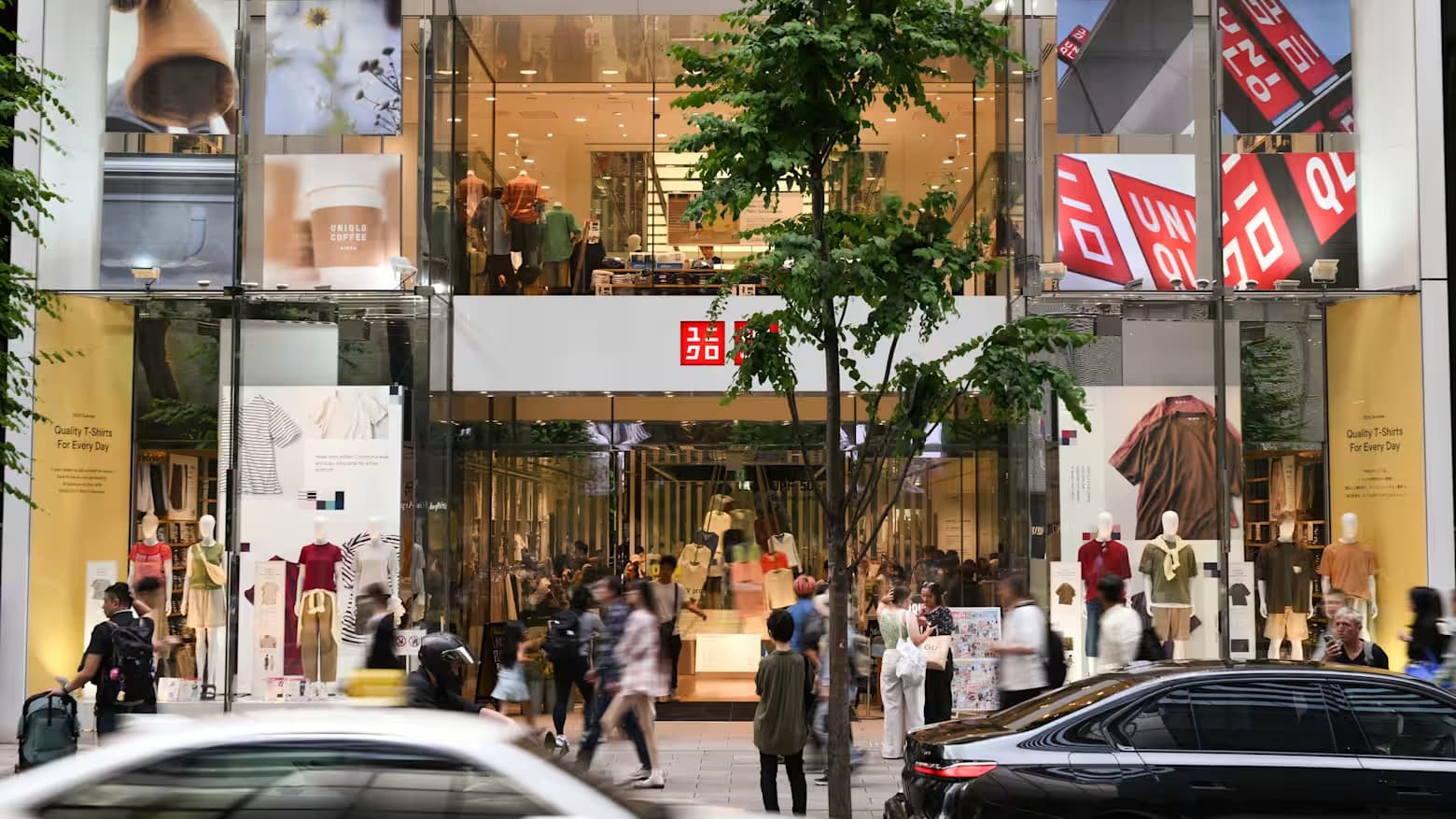
When the international push finally accelerated, it did so on firm foundations. Uniqlo now draws a large and growing share of its sales from outside Japan, with expansion in North America and Europe running alongside a deep presence across Asia. The brand that once needed to explain itself to foreign shoppers has become a fixture on prominent high streets, its flagship stores treated as destinations in their own right.
Why H&M slipped behind
Overtaking H&M is as much about the Swedish company's struggles as Uniqlo's strength. For years H&M rode the fast fashion wave, opening stores at speed and turning out trend led ranges at low prices. That model has lost some of its shine, squeezed by a nimbler rival in Inditex at the top and by ultra cheap online sellers snapping at the bottom. Caught in the middle, its growth has flattened.
The winners in clothing today are those with a clear identity, not those simply chasing the lowest price or the latest trend.
Uniqlo sidestepped that trap by refusing to define itself as fast fashion at all. Its bet on timeless basics rather than disposable trends has aged better, insulating it from the pressures that have worn down its rival. The result is a company gaining ground precisely where H&M has been giving it up.
The markets that matter now
The next phase of the story will be written far from Japan. North America and Europe are the fastest expanding pieces of the business, and management has made clear it sees room to open many more stores in both. Success there would turn a company still rooted in Asia into a genuinely global retailer, with no single market able to make or break a quarter.
Not every region is straightforward. Greater China, long a powerful engine of growth, has become harder work as consumers there grow more cautious and local competition sharpens. How Fast Retailing navigates that softer patch while pressing its advantage in the West will shape whether the lead it is about to seize proves lasting or fleeting.
A founder's long game
Behind the numbers sits the vision of Tadashi Yanai, the founder who built Fast Retailing from a provincial shop into one of Japan's most valuable companies. His long stated ambition was to make Uniqlo the biggest clothing brand in the world, a goal that once sounded like bravado and now looks within reach. Passing H&M would leave only Inditex, owner of Zara, standing ahead.
That final gap is still wide, and closing it would demand years more of the disciplined expansion that got the company this far. But the direction of travel is no longer in doubt. A Japanese retailer built on plain, well made clothes has climbed to the front rank of a global industry, and the milestone it is about to reach is less a finish line than a marker on a longer road. For now, the wardrobe of the world is being reordered from Tokyo.