Two of the aerospace world's heavyweights are joining forces to put unmanned eyes and ears over the waters around Japan. Kawasaki Heavy Industries and Airbus plan to team up on an anti submarine drone, pairing European airframe expertise with Japanese sensor know how to pitch a new maritime patrol aircraft to Tokyo.
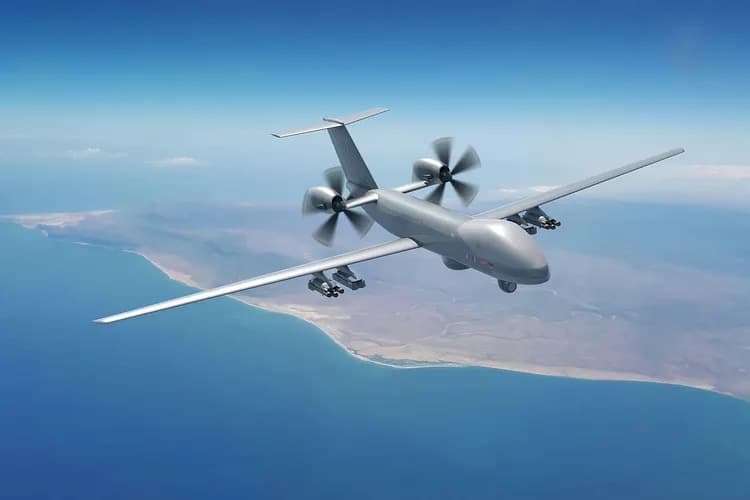
The plan, announced in late June, would build on Airbus's Eurodrone, an intelligence gathering aircraft already in development in Europe. Kawasaki Heavy would fit the platform with the anti submarine systems it specializes in, and the combined aircraft would then be proposed to Japan's defense ministry.
Splitting the work
The logic of the partnership is a clean division of labor. Airbus brings a large, long endurance drone designed for surveillance and reconnaissance. Kawasaki Heavy brings decades of experience in submarine hunting, the sensors, processing, and weapons that turn a flying platform into a tool for tracking what moves beneath the surface.
Rather than build a new aircraft from scratch, the two would adapt an existing one, a faster and cheaper route to a capable system. For Kawasaki Heavy, it is a chance to extend its maritime patrol franchise into the unmanned era. For Airbus, it is an opening into the Japanese defense market and a new use case for a platform it is already developing.
Why an unmanned hunter
Submarine hunting is demanding, dangerous, and expensive work, the kind of long, monotonous patrolling that drones are well suited to take on. An uncrewed aircraft can stay aloft for extended stretches, cover wide areas of ocean, and do so without putting a flight crew at risk, while feeding data back to commanders on the ground or at sea.
For an island nation surrounded by busy and contested waters, that capability matters. Persistent maritime surveillance is central to Japan's defense, and adding an unmanned layer to its patrol fleet would let it watch more of the sea for longer, complementing the crewed aircraft it already flies.
The business behind the deal
The tie up also reflects a broader shift in how defense gear gets built. National champions increasingly partner across borders to share cost, spread risk, and pool specialized skills that no single company holds. Japan's gradual loosening of its rules on defense equipment and cooperation has made these kinds of cross border arrangements far more feasible than they once were.
For now the project remains a proposal rather than a contract. The companies still have to win over Japan's defense ministry, and the path from a joint pitch to an aircraft in service is long. But the partnership signals where both firms see demand heading, toward smarter, unmanned systems for the unglamorous but vital task of guarding the seas.