
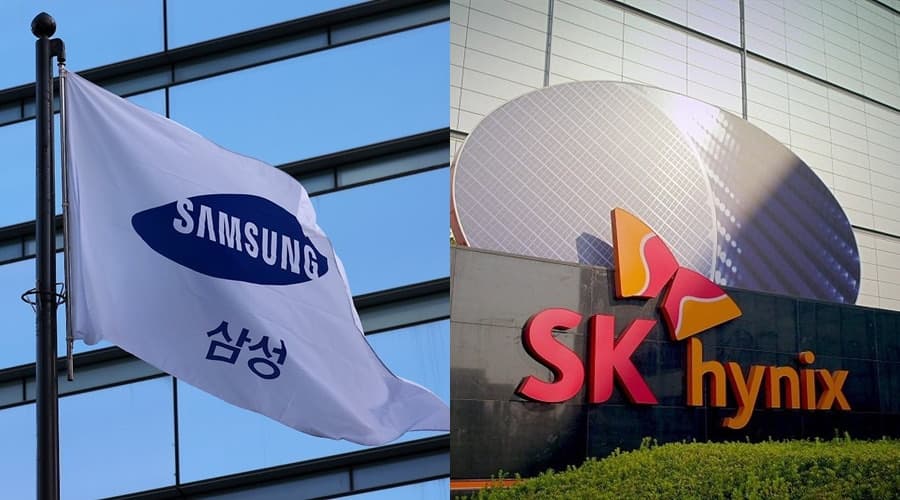
South Korea's stock market has been on a remarkable run, lifted by two chip giants riding the global hunger for artificial intelligence. Lately it has also been jumpy, and that turbulence is drawing attention to a less comfortable truth. A large part of the rally has been bought on credit.
When the benchmark index swings sharply from day to day, the question is not only what the chipmakers are worth, but how much of the buying was done with borrowed money. As volatility rises, so does the worry that leverage which magnified the climb could just as easily magnify a fall.
A market resting on two names
The Korean market is unusually concentrated. Samsung Electronics and SK Hynix together account for close to half the value of the country's main index, which means the broader market tends to move with them. When the two semiconductor leaders rise, the whole bourse looks strong. When they wobble, everyone feels it.
Both companies have been clear beneficiaries of the AI boom, supplying the advanced memory and processing power that data centers around the world are racing to buy. That demand is real, and it has given investors a genuine reason to be optimistic. The danger is that genuine optimism can curdle into something more fragile when it is funded by debt.
The borrowed money behind the rally
Margin balances, the money investors borrow from brokers to buy shares, have climbed alongside the chip champions. Borrowing to invest works beautifully while prices rise, because the gains come on a larger position than the investor could otherwise afford. The trouble is symmetry. The same leverage that enlarges profits also enlarges losses.
If prices drop far enough, leveraged investors can face margin calls that force them to sell, and that forced selling can drive prices lower still. In a market where so much rests on two stocks, a sharp move in either can set off a chain reaction that spreads quickly through accounts built on credit.
Why the concern is growing now
For most of the rally the leverage stayed in the background, invisible as long as the line kept going up. The recent bouts of volatility have changed that, offering a preview of how fast sentiment can turn when a crowded, borrowed trade hits a rough patch.
None of this means the AI story is over or that the chipmakers are overvalued by definition. It means the market has become more sensitive, more prone to swings that feed on themselves, and more exposed to the behavior of investors who do not own their positions outright.
What it signals
For South Korea, the episode is a reminder that a powerful bull market and a fragile one can look almost identical from the outside. The fundamentals behind Samsung and SK Hynix may be sound, but a market leaning heavily on borrowed money carries a risk that has nothing to do with chips and everything to do with how the bets were placed.
The rally can continue, and the demand for AI hardware shows little sign of fading. The lesson from the recent volatility is simply that the way up and the way down can travel the same road, and leverage decides how fast.