
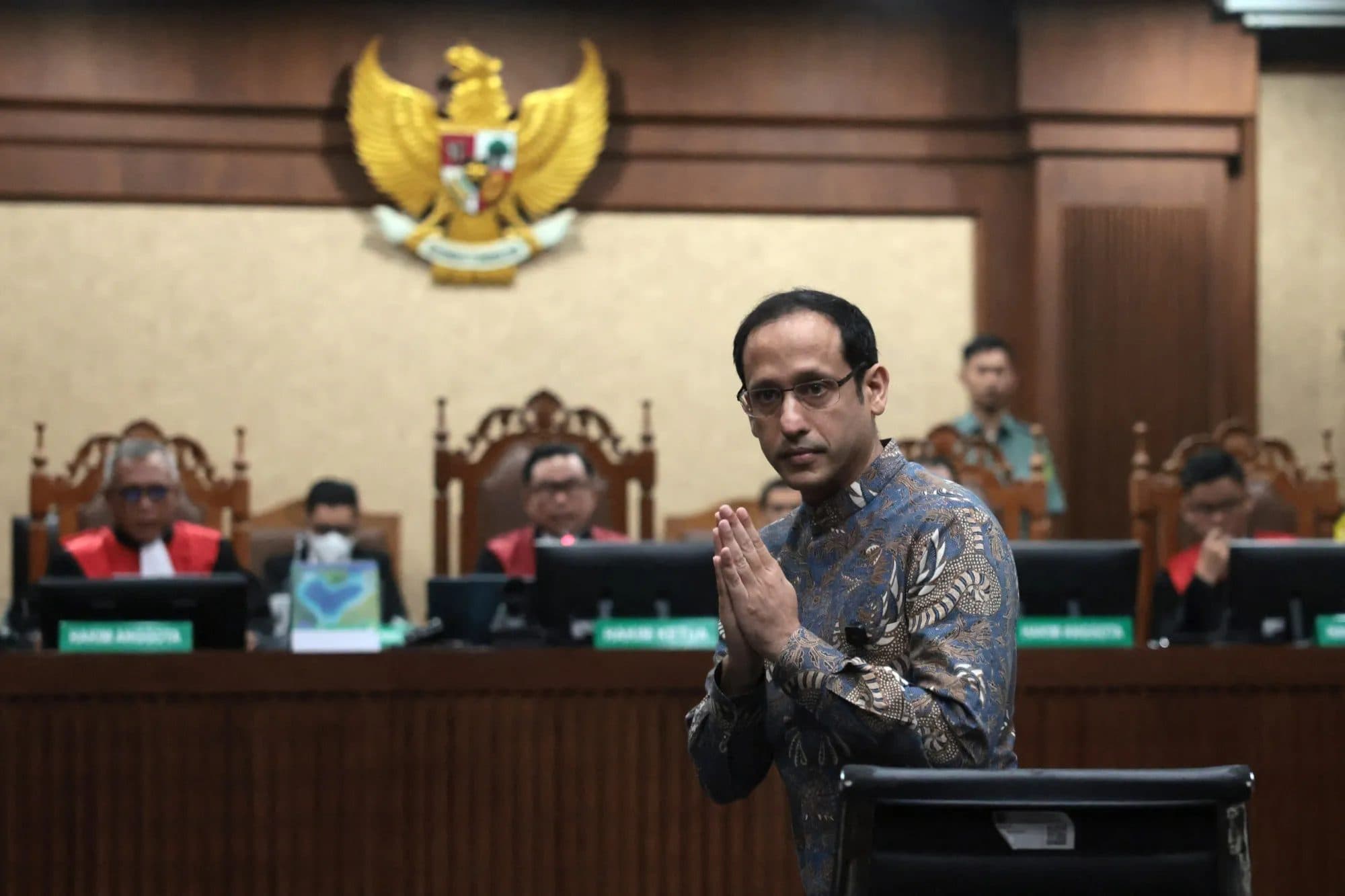
A court in Jakarta has sentenced Nadiem Makarim, the entrepreneur who helped build Indonesia into one of Southeast Asia’s most closely watched technology markets, to 10 years in prison on corruption charges, a verdict that has rattled the country’s business community and raised fresh questions about the climate for investors.
Makarim, who co-founded the ride hailing and delivery giant Gojek before serving as the nation’s education minister, was also ordered to pay a fine of 810 billion rupiah, equal to about 45 million dollars. The charges center on the procurement of laptops under a government program meant to bring digital tools into classrooms across the archipelago.
From startup founder to cabinet minister
Few figures embody Indonesia’s tech ambitions as fully as Makarim. The company he helped launch grew from a motorcycle taxi service into a sprawling platform spanning payments, food delivery and logistics, and later merged into one of the country’s largest listed technology groups. That track record made his move into government, where he took charge of overhauling the education system, a high profile bet on bringing private sector energy into public service.
The case ties directly to that ministerial work. Prosecutors argued that the rollout of laptops for schools was tainted, turning a flagship digitalization push into the basis for a graft conviction against the man who once championed it.
A verdict that worries investors
The ruling has landed heavily on Indonesia’s business circles, where many see it as more than a single courtroom defeat. Critics have described the prosecution as politically driven, warning that pursuing a prominent founder over a government program could chill the appetite of entrepreneurs and financiers who have poured money into the country’s digital economy.
Makarim has rejected the accusations, earlier dismissing the case against him as an illusion built on shaky legal ground. His conviction now stands as a stark marker of how exposed even celebrated business leaders can be once they step into the orbit of public office and state contracts.
Ripples across the tech economy
For an economy that has spent years courting venture capital and selling itself as a magnet for startups, the optics are awkward. Several other cases involving investors and executives have drawn similar scrutiny, feeding a perception that the line between aggressive anti corruption enforcement and the targeting of business figures has grown blurry.
What happens next, including any appeal, will be watched closely by founders and funds across the region. The outcome will help shape whether Indonesia is seen as a place where ambitious builders can take risks, or one where success in business and proximity to government carry dangers of their own.