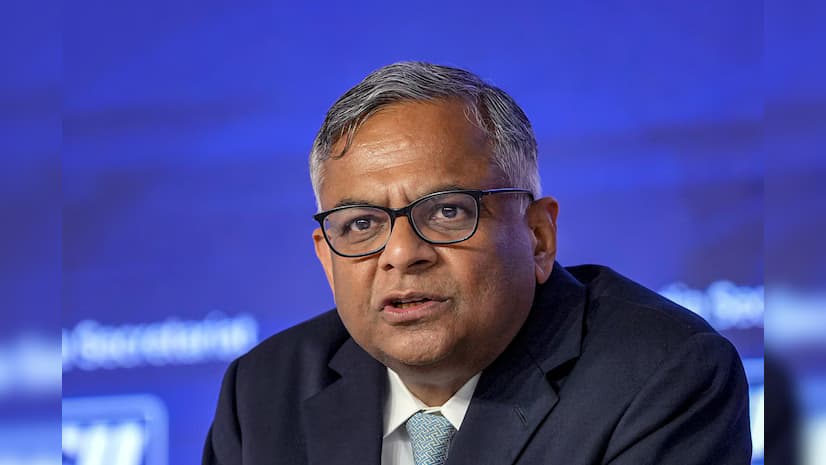
For nearly a decade Natarajan Chandrasekaran has been the steady hand at the top of Tata Sons, the holding company that sits at the center of India's most storied business empire. Now he has signaled that his run is ending. Chandrasekaran has made clear he will not seek another term and will step down when his current one expires in February 2027, closing a chapter that began when he became the first person from outside the founding family to lead the group's controlling entity.
On the surface this could pass for an orderly succession. Underneath, it is anything but. His departure follows a bruising and unusually visible disagreement over the direction of the group, one that pitted the man running the business against the trusts that own it, and that centered on a single explosive question of whether the famously private Tata Sons should be forced onto the public stock market.
The listing that nobody in the family wants
The fight has its roots in a regulatory technicality with enormous consequences. India's central bank has classified Tata Sons as a large non-bank financial company of the kind it wants brought under tighter supervision, a status that carries with it an expectation that the company list its shares publicly. For most firms a listing is a milestone to celebrate. For Tata Sons, which has long guarded its privacy and its freedom from the quarterly demands of public shareholders, it is a prospect the family and its trusts have resisted with real determination.
That resistance put Chandrasekaran in an impossible position. As the executive responsible for meeting the group's obligations, he was unwilling to promise in writing that Tata Sons would never list, a commitment that would have tied the company's hands against its regulator. The trusts, guardians of the founding family's wishes, wanted exactly that assurance. The gap between those two stances proved too wide to bridge, and it hardened into the rift that now costs the group its chairman.
A rare crack in a united front
What makes the episode so striking is that Tata almost never airs its disputes in public. The group has cultivated an image of unity and long-term stewardship, and its leadership battles, when they happen, usually play out behind closed doors. This one spilled into view. When the board considered extending Chandrasekaran's tenure earlier in the year, the proposal failed to win the unanimous backing that such decisions traditionally command, and a bloc of directors ready to support him could not carry the day.
The tension has run between Chandrasekaran and the Tata Trusts, the philanthropic bodies that hold the controlling stake in Tata Sons and that speak for the interests of the founding family. With the trusts now led by Noel Tata, a member of that family, the balance of power between the owners and the professional manager they hired has been tested in a way it rarely is. The outcome suggests the owners were not prepared to let the manager set the terms.
In a group built on the idea of trusteeship, the question of who ultimately decides, the owners or the executive, was always going to matter more than any single strategy.
The business troubles behind the politics
The governance clash did not happen in a vacuum. It was sharpened by unease over parts of the empire that have been losing money, and objections raised within the family pointed to specific sore spots. The revived Air India, which Tata bought back with great fanfare and which Chandrasekaran championed, has been costly to turn around. The group's digital arm and its streaming venture have also bled cash, and those losses gave critics ammunition to question the direction of his most ambitious bets.
None of this erases his record, which includes steering the group through a difficult stretch, simplifying its sprawling structure and pushing it into industries India wants to build at home. But bold expansion carries bold risks, and when the results disappoint, the same boldness that once looked like vision can be recast as overreach. The businesses that were meant to define his legacy became, in the end, part of the case against extending his time in charge.
The search for a successor
Attention now turns to who will take the reins in 2027 and what mandate that person will carry. Whoever succeeds Chandrasekaran inherits not only a vast and complicated conglomerate but an unresolved argument about its very structure, since the pressure to list has not gone away simply because the chairman has. The next leader will have to find an answer to the same regulatory demand that helped end their predecessor's tenure.
For India, the stakes reach beyond one boardroom. The Tata group is woven through the national economy, from steel and cars to software, salt and aviation, and its stability is treated almost as a matter of public interest. A smooth handover would reassure a country that looks to Tata as a symbol of durable, responsible enterprise. A messy one would suggest that even the steadiest of institutions is not immune to the strains of ambition, ownership and the hard choices that come when a private empire is pushed toward the public eye.