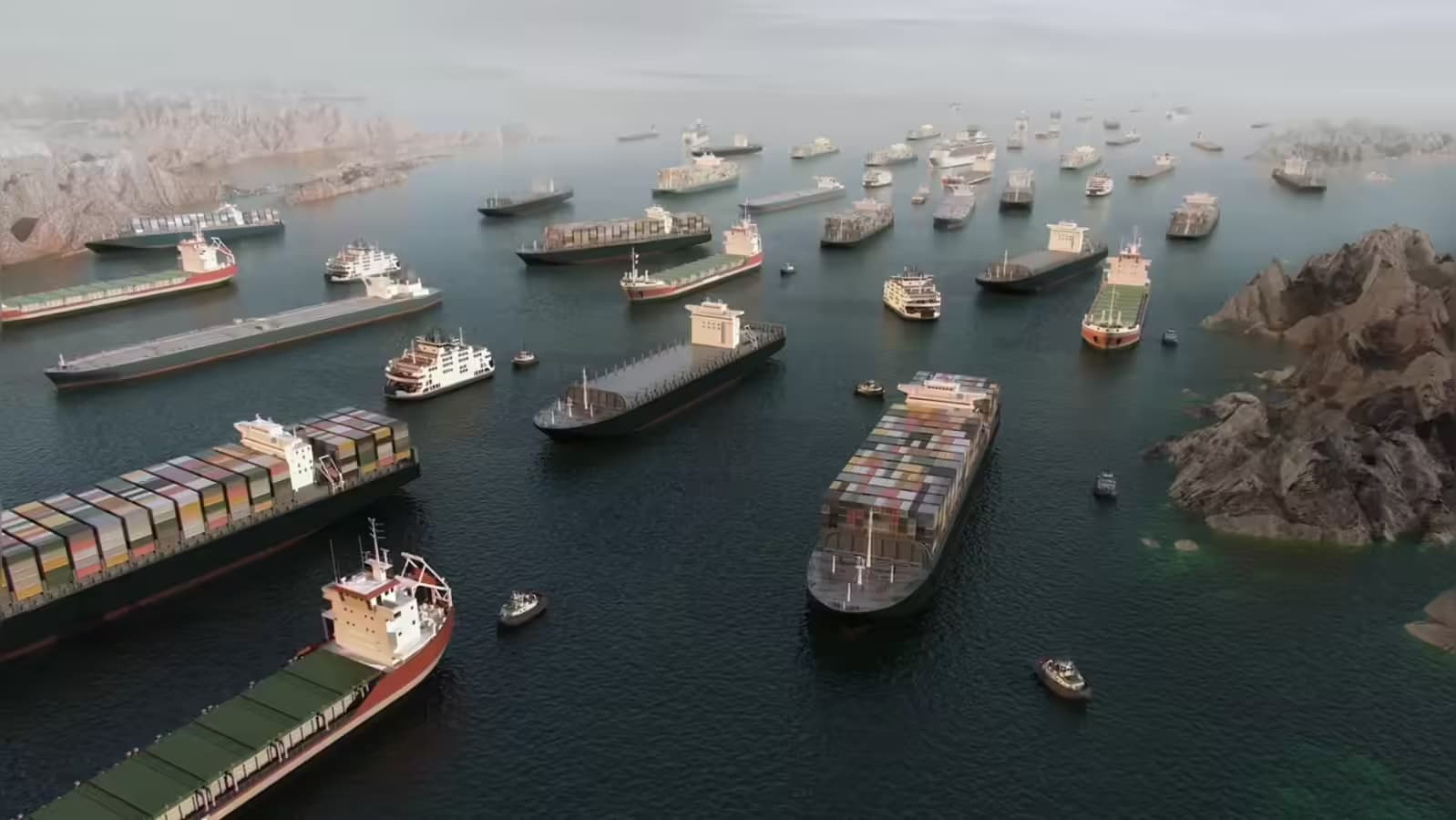
For most of its life, Taiwan's biggest shipbuilder made its money the hard way, competing with vast, low cost yards in China, South Korea, and Japan for orders to build tankers and container ships. It was a punishing business with thin margins and long stretches of losses, and there were years when survival looked like the most ambitious goal on the table. That struggle is now giving way to something the company had not counted on, a defense boom on its own doorstep.
CSBC, the state backed builder based in Taiwan, is reorienting itself around military work as the island expands its maritime forces to answer a more assertive China. Chinese ships and aircraft operate near Taiwan almost daily, and the government has responded by pouring money into a naval buildup meant to make any blockade or invasion far harder to pull off. For the shipbuilder, that shift has turned national anxiety into an order book.
The submarine that changed the story
Nothing captures the transformation more than the submarine program. Taiwan set out to build its own attack submarines after decades of being unable to buy them abroad, a project long dismissed as too difficult for a country that had never made one. The first boat in that indigenous effort, known as the Hai Kun, has moved from blueprint to a real hull nearing completion, and it has become the clearest proof that the island can produce advanced naval hardware at home.
The company's chairman has pressed lawmakers to keep funding the program through to a full fleet rather than stopping at a single prototype. His argument is straightforward. A lone submarine is a demonstration, while a squadron is a deterrent, and the industrial base needed to build the second only pays off if the orders keep coming. The politics are contentious, but the strategic logic has been hard for the legislature to wave away.
Betting on the uncrewed fight
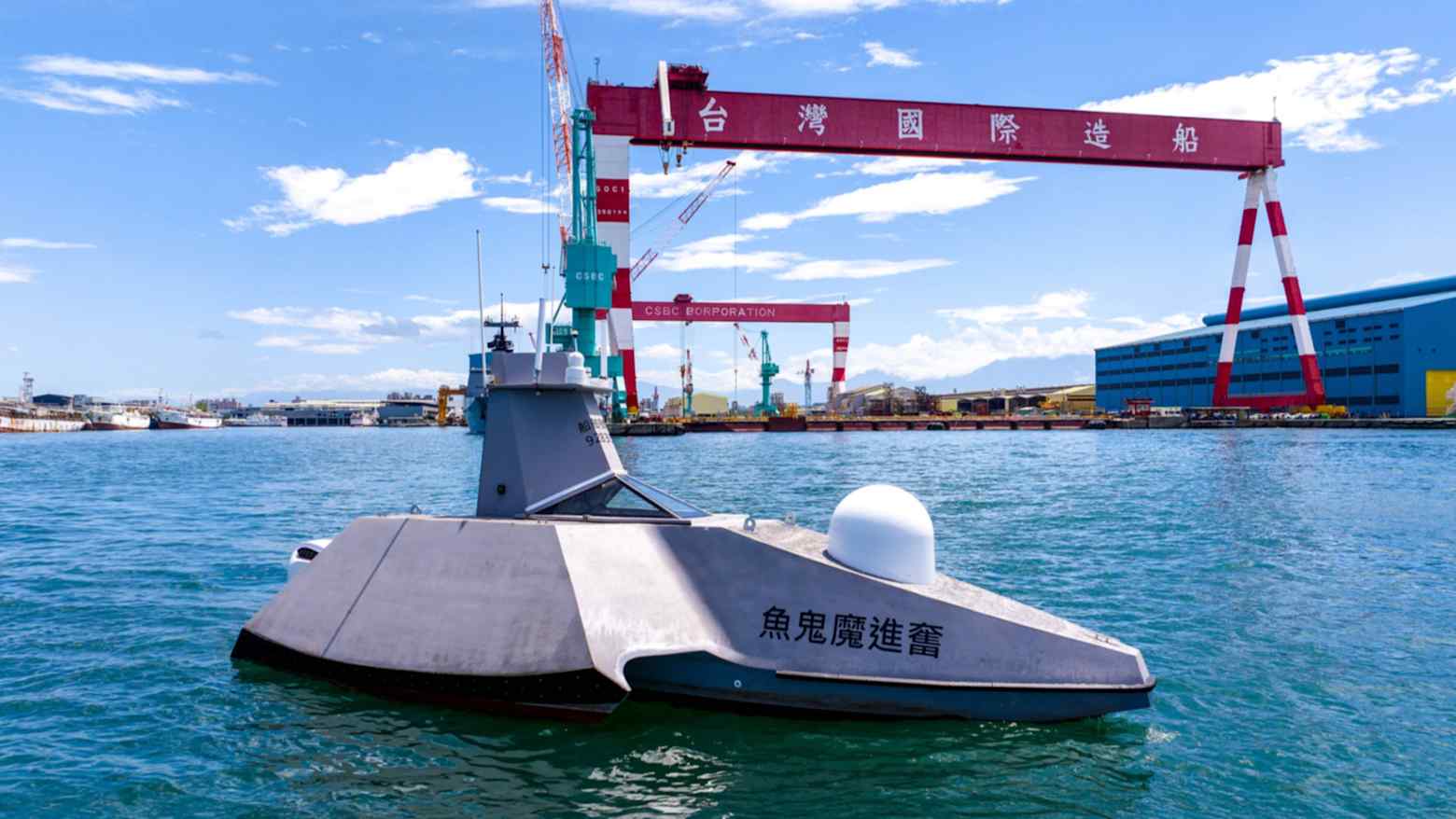
Alongside the submarines, CSBC has moved quickly into a newer and cheaper form of naval power. Last year it unveiled the Endeavor Manta, one of Taiwan's first military uncrewed surface vessels, a low slung sea drone built to run patrol, rescue, and strike missions without a crew aboard. The design reflects a lesson drawn from recent conflicts, where small, expendable robotic boats have proven capable of threatening warships that cost hundreds of times as much.
A swarm of cheap, uncrewed boats is exactly the kind of asymmetric answer a smaller power needs against a much larger navy.
For a place like Taiwan, that math is compelling. The island cannot hope to match China ship for ship, so the appeal of fleets of inexpensive drones that can be fielded in numbers and risked without losing sailors is obvious. By moving early into the technology, CSBC is positioning itself to supply a category of weapon that many navies are only beginning to take seriously.
From choppy waters to a full pipeline
The turn toward defense has done more than add a product line. It has given the company a reason to invest in skills, facilities, and a workforce that a purely commercial yard could not justify. Building submarines and combat drones demands precision engineering and tight security, and the capabilities developed for one program tend to feed the next. A yard that spent years fighting to stay afloat now has a pipeline that stretches out for years.
The risks have not vanished. Defense work is lumpy, dependent on political will and annual budgets that can be cut as easily as they are raised, and a change of mood in the legislature could slow the very programs the company is banking on. Building complex warships and submarines also invites delays and cost overruns that can strain a firm still recovering from leaner times. The transformation is real, but it is not yet secure.
A company and an island aligned
What makes the story larger than one balance sheet is how tightly the fortunes of the builder and the security of the island have become linked. A stronger CSBC means Taiwan can arm itself without depending entirely on foreign suppliers who may hesitate under pressure from Beijing. A more threatened Taiwan, in turn, means a fuller order book for the yard. The commercial revival and the national defense have started to move as one.
That alignment is the quiet bet at the heart of the shift. The chairman is wagering that the pressure from across the strait will not ease, and that the demand for homegrown ships, submarines, and drones will hold long enough to make the pivot permanent. It is a grim thing to build a business on, yet for a company that spent years searching for stable ground, the defense drive has offered the firmest footing it has had in a long while.