Rakuten is not the company anyone would expect to turn up in the business of war. The Japanese group made its name in online shopping and later poured billions into building a mobile network, positioning itself as a consumer internet champion rather than an arms dealer. Yet it is now stepping into the defense world, acting as the bridge that brings advanced military drones from a German maker to Japan's armed forces. The move is as surprising as it is telling about the moment Japan finds itself in.
The partner is Helsing, a Munich-based firm that has become the standout name in European defense technology. Helsing builds artificial intelligence for the battlefield and has moved aggressively into strike drones, and investors have rewarded it lavishly. A recent funding round raised around 1.8 billion dollars and valued the company at some 18 billion dollars, the largest defense startup raise Europe has seen and enough to make Helsing Germany's most valuable private firm. This is no fringe supplier but one of the most closely watched companies in the industry.
A weapon forged in Ukraine
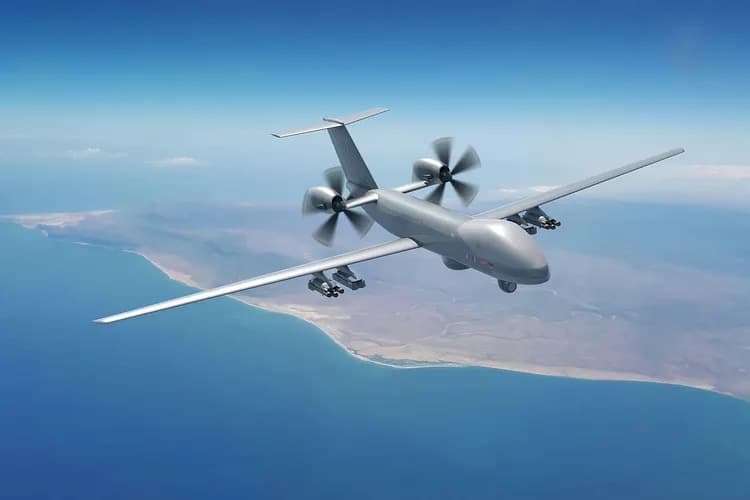
The centerpiece of Helsing's drone lineup is a compact loitering munition, a weapon that hovers over a battlefield before diving into its target. Weighing around a dozen kilograms and able to strike targets roughly a hundred kilometers away, it is designed to keep working even when satellite navigation is jammed, using onboard artificial intelligence to find and hit what it is aimed at. It is exactly the sort of cheap, smart, expendable weapon that has reshaped the fighting in Ukraine and forced militaries everywhere to pay attention.
That combat pedigree is central to its appeal. The war in Ukraine has demonstrated that swarms of inexpensive autonomous drones can blunt tanks, ships and entrenched positions that once seemed secure, upending assumptions about how wars are won. Helsing has supplied its drones to Ukraine and scaled up production on the strength of that demand, and the credibility earned on a real battlefield is precisely what makes its technology attractive to a country like Japan now racing to modernize.
Rakuten as the middleman
Rakuten's role, at least for now, is that of a broker and bridge rather than a manufacturer. The company has served as the point of contact between Helsing and the Japanese government, helping to open doors and smooth the path for the German firm's entry. Japan's Ground Self-Defense Force has been putting the drones through field tests, a trial phase running into the autumn that will help determine whether the weapons suit the country's needs before any larger commitment is made.
The connection runs partly through Rakuten's founder, Hiroshi Mikitani, who has been among the most outspoken supporters of Ukraine within Japan's business elite. His sympathies have aligned neatly with Helsing's mission, and his willingness to lend his company's name and relationships to a defense project reflects a personal conviction as much as a commercial calculation. For a founder used to selling books and broadband, championing combat drones is a notable turn.
When an online shopping company starts brokering strike drones, the change underway is not in one firm but in a whole country's idea of itself.
Why Japan is buying
The deal makes sense only against the backdrop of Japan's dramatic rethink of its own defense. Faced with an assertive China, an unpredictable North Korea and a Russia that has shown its willingness to redraw borders by force, Tokyo has committed to a major military buildup and a sharp rise in defense spending after decades of restraint. Autonomous drones sit near the top of its shopping list, seen as a cost-effective way to strengthen deterrence without matching rivals soldier for soldier.
There is also an industrial ambition at work. The collaboration could eventually extend beyond importing finished weapons to producing autonomous equipment inside Japan, building domestic know-how in a field the country cannot afford to ignore. Localizing that capability would give Japan more control over its supply and fit a broader push to revive a defense industry long constrained by the nation's postwar pacifism.
A taboo quietly falling
What makes the episode resonate is how far it departs from recent norms. For generations Japan kept its private sector at arm's length from weapons, and a consumer brand associating itself with lethal drones would once have been almost unthinkable. That such a partnership can now be announced openly, with a household name attached, shows how much the political and cultural ground has shifted as the security environment has darkened.
For Helsing, the arrangement opens a valuable door into Asia and a wealthy new customer at a time when defense budgets are swelling across the region. For Rakuten, it is a bet that the future of national security will be built on software and drones as much as on tanks and ships, and that a technology company has a place in that future. Whether the field tests lead to major orders remains to be seen, but the direction of travel is unmistakable, and the line between the consumer economy and the business of defense in Japan has grown noticeably thinner.