For most of its long history, Mizuno has outfitted people who run, swing, and throw. The Osaka company built its name on baseball gloves, running shoes, and golf clubs, the gear of sports defined by sweat and motion. So its arrival in the world of competitive video gaming, where the action happens through thumbs and wrists rather than legs and lungs, looks at first like a company wandering far from home. Look closer and the logic is sharper than it seems.
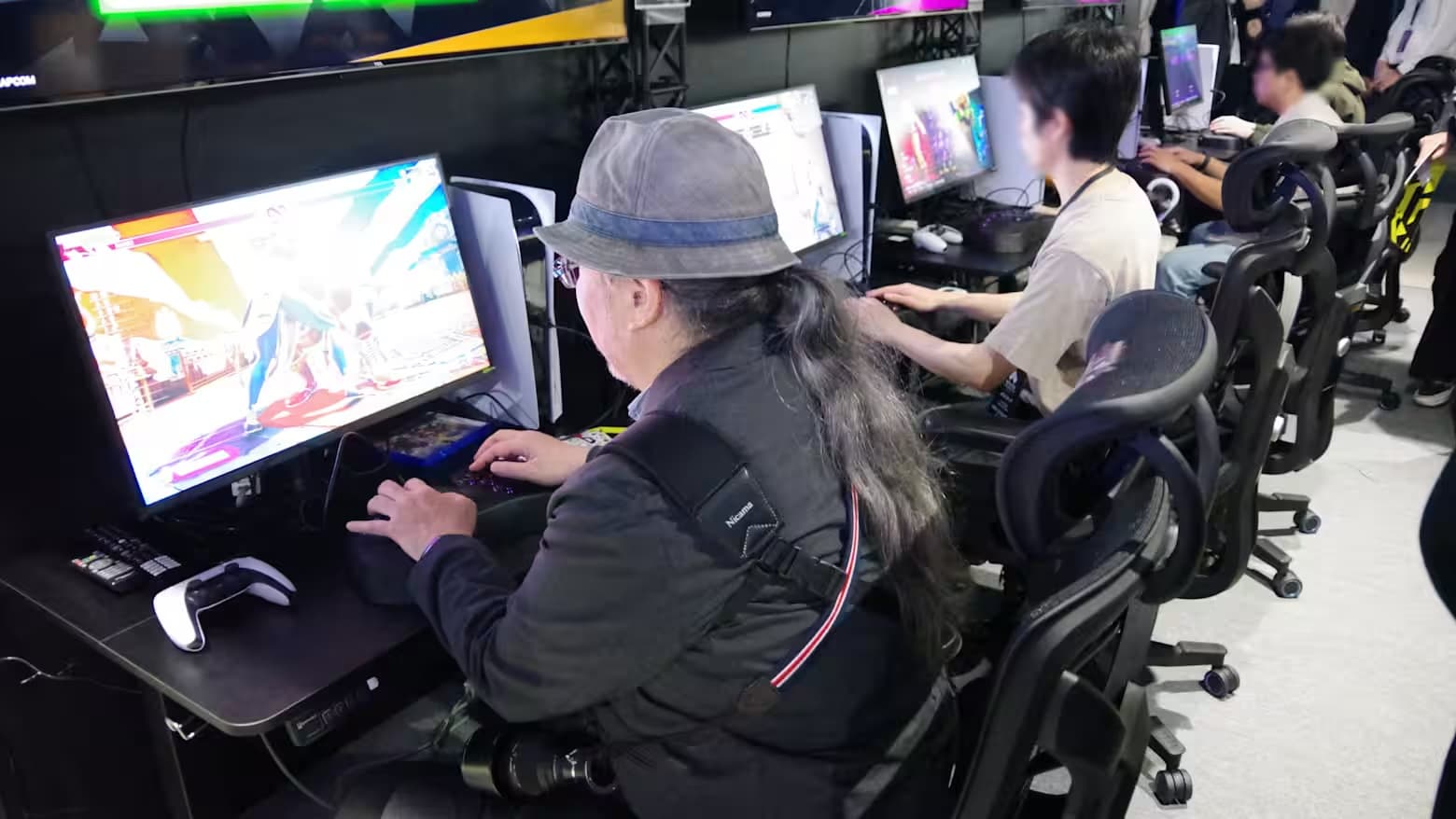
Mizuno showed its first esports products this spring at EVO Japan, the country's premier fighting game festival, held at Tokyo Big Sight. Rather than chase the flashy accessories that already crowd the market, the company arrived with a different question. If the best gamers now train, compete, and earn like professional athletes, why is no one treating their bodies the way a sports brand treats an athlete's body? Answering that question is the whole of its strategy.
The athlete-led idea
The pitch Mizuno calls athlete led starts from a simple observation. A top competitor may sit for eight or ten hours a day, shoulders hunched, hands locked in the same tense grip, eyes fixed on a screen. That is a physical regime, and like any physical regime it takes a toll. Wrist strain, back pain, stiff necks, and fatigue are the occupational hazards of the trade, familiar to anyone who has watched a young player's career shortened by an injury that had nothing to do with skill.
Traditional sports solved these problems long ago with conditioning, warm ups, ergonomics, and recovery. Mizuno's wager is that competitive gaming has not yet imported that discipline, and that a company steeped in it for a century is unusually placed to bring it in. The gear is only the visible part. Underneath sits the promise of applying real sports science to a pursuit that has mostly been treated as play.
Selling care, not just kit
That framing shapes what the company actually offers. Instead of leading with a louder mouse or a brighter keyboard, Mizuno leans toward the things it already understands, apparel designed for long sittings, support for posture and circulation, and the beginnings of training routines built for gamers. The point is less the individual product than the idea binding them together, that a player is an athlete and deserves the same attention to the body that any athlete receives.
The market is crowded with gear that promises to make you win. Mizuno is selling something rarer, the promise of a longer career.
There is a commercial calculation here as well as a philosophical one. The accessory aisle of gaming is a brutal place, packed with rivals competing on specifications and price, and a newcomer has little hope of standing out by playing that game. By reframing the customer as an athlete rather than a shopper, Mizuno steps onto ground where its heritage is an advantage rather than a liability. It is competing on trust and expertise, not on refresh rates.
Why the timing works
The move also reflects where the company's traditional business is heading. Demographics at home are shrinking the pool of young people playing physical sports, and any maker of bats and boots has to think hard about where its next generation of customers will come from. Competitive gaming, by contrast, is young, growing, and global, and its participants increasingly see themselves as serious performers rather than casual players. Meeting them where they already are is a way to stay relevant as the old markets soften.
Legitimacy runs in both directions. Esports has spent years arguing that it deserves to be taken as seriously as conventional sport, and a storied athletic brand treating its players as athletes lends weight to that claim. For Mizuno the benefit is a foothold in a fast expanding arena. For the gaming world it is a nod from an institution that spent a hundred years defining what an athlete is.
The test ahead
None of this guarantees success. Gamers are a discerning and skeptical audience, quick to dismiss a legacy brand that looks like it is chasing a trend it does not understand. Mizuno will have to prove that its conditioning ideas deliver something players can feel, not just a story that sounds good in a press release. Credibility earned over a century in one field does not transfer automatically to another.
Still, the bet is a thoughtful one. Rather than imitate the gaming industry, Mizuno is trying to hand it something the industry has lacked, a serious approach to the health of the people at its center. If competitive gaming really is a sport, then its athletes will eventually want what every other athlete has come to expect. The company is wagering that it can be the one to provide it, and that being early to take players seriously will matter more than being loudest in the aisle.