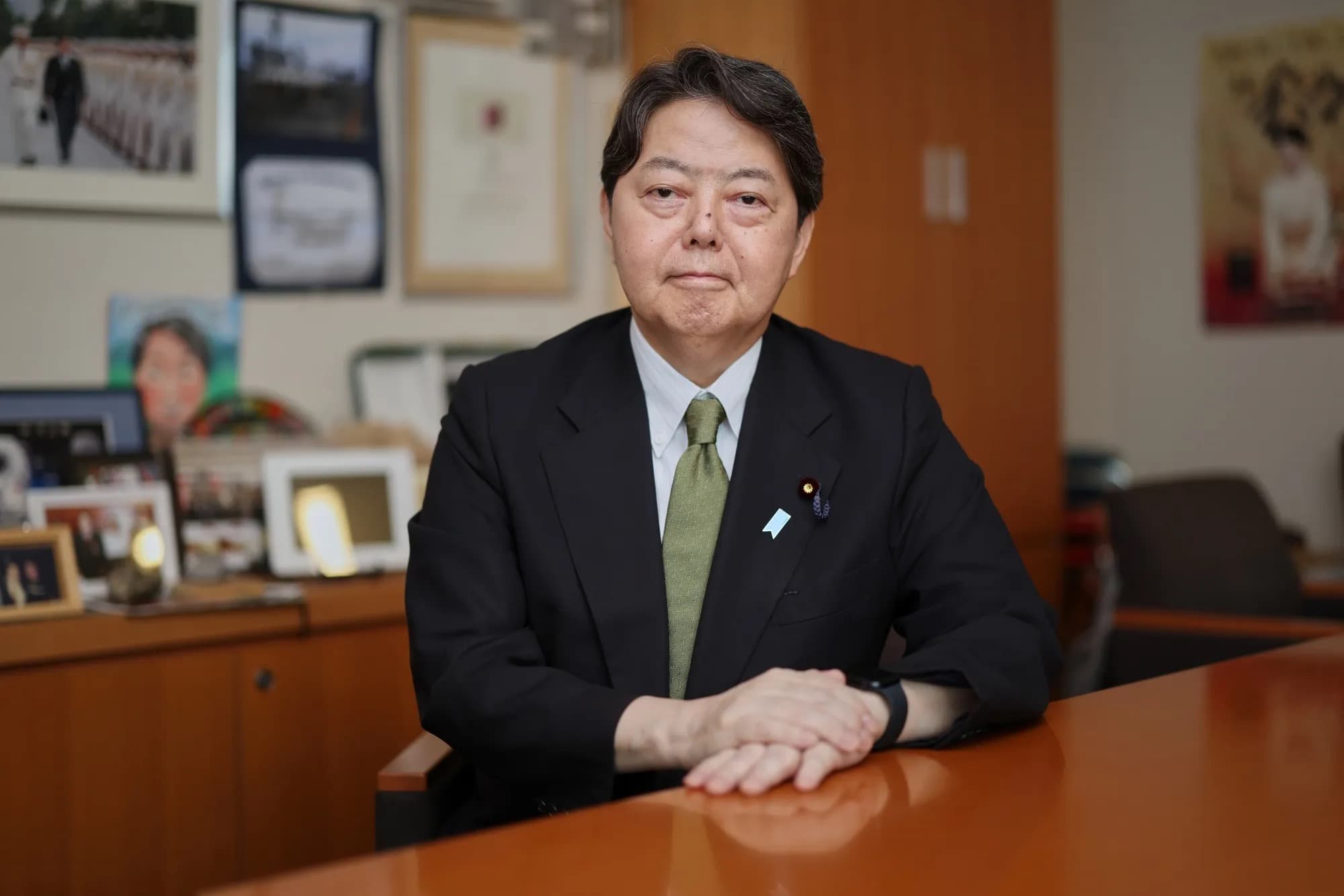
Yoshimasa Hayashi walked out of Prime Minister Sanae Takaichi's cabinet reshuffle this week without a government post for the first time in years, a departure that has done more to fuel speculation about his political future than almost anything he could have said directly. Of the four rivals who ran against Takaichi in last autumn's Liberal Democratic Party leadership election, Hayashi was the only one left out of both the reshuffled cabinet and the party's senior leadership posts, a distinction that has not gone unnoticed inside the party.
That contest, held in October 2025, pitted Takaichi against four challengers: Hayashi, Defense Minister Shinjiro Koizumi, former Economic Security Minister Takayuki Kobayashi and former Foreign Minister Toshimitsu Motegi. Takaichi won comfortably in the end, defeating Koizumi in a runoff by a margin of one hundred eighty five votes to one hundred fifty six to become the LDP's first female president. In the year since, Koizumi, Kobayashi and Motegi have all held onto senior roles inside the government or the party, leaving Hayashi's exit from the internal affairs and communications post this week as the clear outlier among the group.
Reading the tea leaves inside the LDP
People close to Takaichi are reportedly growing wary that Hayashi could become a rallying point for factions within the party unhappy with her leadership ahead of the next LDP presidential election, scheduled for autumn next year. Losing a cabinet post can cut either way in Japanese politics, sidelining a rival from public visibility or, just as often, freeing that person from the constraints of government responsibility to focus entirely on building support within the party itself.
Hayashi has given some signal of which path he intends to take. He moved quickly after the reshuffle to announce plans to continue touring regional LDP chapters, a classic groundwork building exercise for anyone weighing a future leadership bid, since support from local party organizations carries real weight in how presidential elections within the LDP ultimately play out.
A résumé built for exactly this moment
Hayashi is no outsider angling for his first shot at the top job. He has held some of the most prominent posts in Japanese government over his career, including stints as foreign minister and, most recently, internal affairs and communications minister, giving him both name recognition and a substantive record to run on if he does eventually mount another leadership challenge. That kind of pedigree is exactly what makes his exclusion from Takaichi's reshuffled team read as more than a routine personnel decision to political observers inside the party.
What Takaichi's team is watching for
For now, Hayashi has not announced any leadership ambitions outright, and Japanese political norms generally discourage that kind of declaration far in advance of an actual vote. But the combination of his cabinet exit, his renewed regional travel schedule, and his standing as the only one of last year's four challengers left without a formal role gives his allies and rivals alike plenty of reason to watch his next moves closely as the countdown to next autumn's leadership election begins in earnest.