
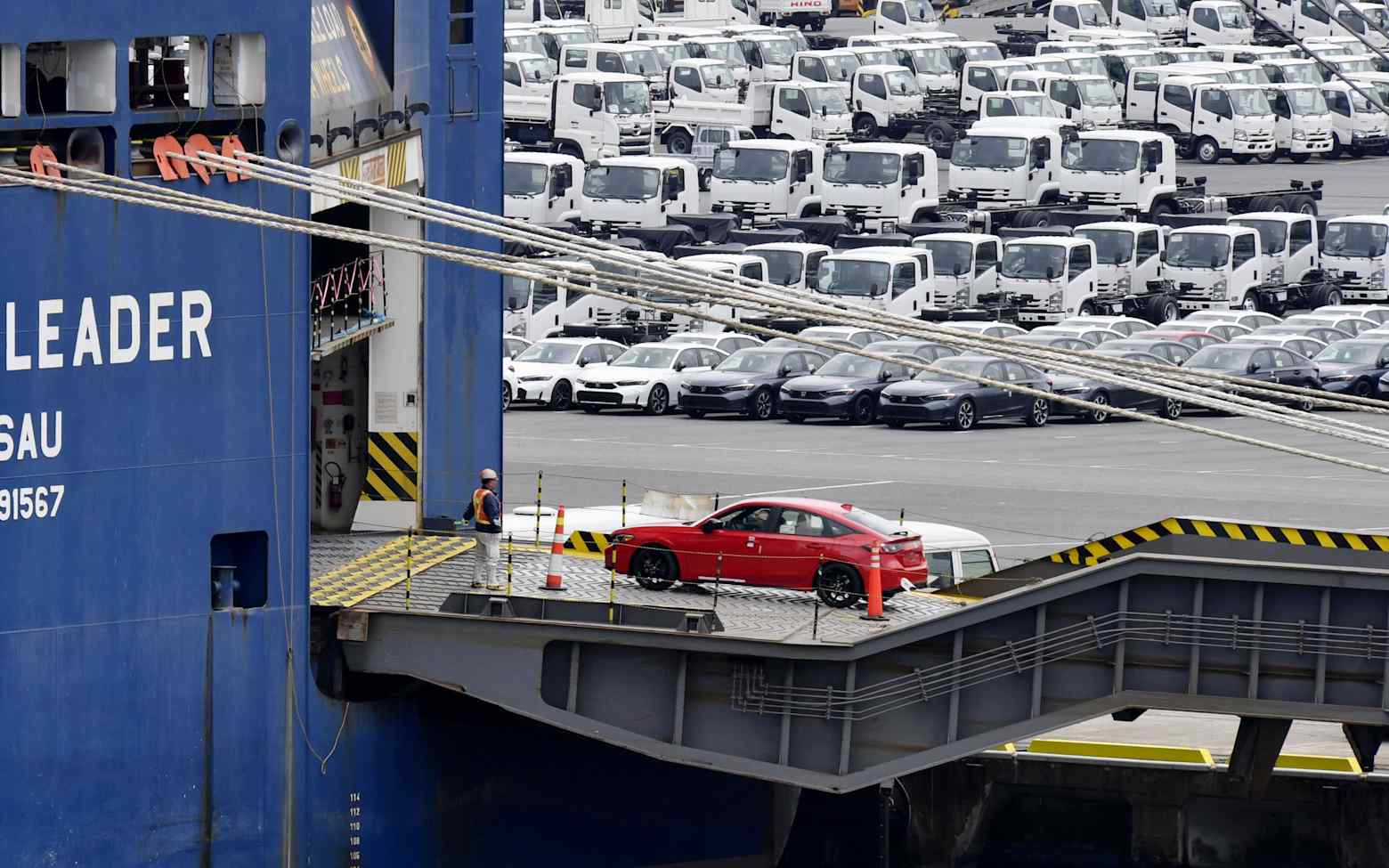
Japan's automakers are enjoying a strange kind of prosperity, one built less on selling more cars than on the value of the money they bring home. The weak yen has become the industry's great equalizer this quarter, inflating overseas earnings when they are converted back into the home currency and smoothing over a set of problems that would otherwise have looked painful. Nowhere is the effect clearer than at Toyota, which managed to nearly double its profit even as the number of vehicles it sold actually fell.
The headline figures were remarkable. Toyota's quarterly net income surged more than 75 percent to reach 1.5 trillion yen, comfortably ahead of what the market had expected, and the company felt confident enough to raise its profit forecast for the year. A large slice of that windfall came directly from the exchange rate, with the soft yen alone adding something on the order of 2.2 billion dollars to the quarter's bottom line. For a business selling fewer cars, that is a striking way to grow richer.
The magic of the exchange rate
The mechanism is simple but powerful. A Japanese carmaker earns much of its revenue abroad, in dollars, euros and other currencies, and when those earnings are translated back into a weak yen they swell without a single extra vehicle leaving the factory. The same car sold in the United States or Europe simply counts for more at home. That is why Toyota could post a shrinking sales tally and a soaring profit in the same breath, a contradiction that makes sense only through the lens of the currency.
It is a welcome cushion, but it is also a borrowed one. Profits conjured by a favorable exchange rate can vanish just as quickly if the yen strengthens, and they do nothing to fix the underlying business. The danger for the carmakers is that a flattering currency masks weaknesses that need attention, letting management enjoy the numbers while the harder problems underneath them quietly fester.
The troubles the yen is hiding
Those problems are real and mounting. Chief among them is China, once a reliable growth market and now a battlefield the Japanese are steadily losing. Local Chinese brands, especially in electric vehicles, have surged ahead and eaten into the share the incumbents long took for granted. The scale of the retreat is stark, with sales in China dropping by roughly 17 percent in the first half of the year, a decline that would be alarming on its own if the currency were not masking its effect on profits.
Tariffs are the second weight. Import duties in the United States have raised the cost of getting Japanese cars to American buyers, squeezing margins in one of the industry's most important markets and forcing the carmakers to weigh how much of the burden to absorb and how much to pass on. The weak yen offsets some of that pressure by boosting dollar earnings when they return home, but it does not make the tariffs disappear, and a firmer currency would expose their bite immediately.
A cheap yen can flatter a quarter, but it cannot build a better car or win back a customer who has already switched brands.
A war that reroutes the fleet
Then there is the conflict in the Middle East, which has reached deep into the carmakers' supply chains. Fighting has pushed up the cost of raw materials and thrown global shipping into disarray, and the disruption to the Strait of Hormuz has been especially damaging. With that vital passage effectively closed to their vessels, the automakers have been forced to send ships the long way around the Cape of Good Hope, roughly doubling the time it takes to deliver vehicles to Middle Eastern buyers.
Longer routes mean higher costs and slower deliveries, and they add a layer of uncertainty that no amount of currency benefit can fully erase. Total vehicle sales across the industry slipped in the first half of the year, a modest decline on the surface that hides sharper regional pain. The war has turned logistics, usually an afterthought in a good year, into a live drag on the business.
Not everyone rides the same wave
The currency tide has lifted the sector unevenly. Nissan clawed its way back to a quarterly profit and held its full-year guidance steady, a modest but meaningful step for a company that has spent recent years fighting to stabilize itself. Honda, by contrast, has struck a more cautious note, guiding toward lower profit as the tariff headwind bites, a reminder that the weak yen is a shared blessing but not an equal one.
Taken together, the results tell a story of an industry propped up by a favorable exchange rate while the ground shifts beneath it. The profits are real for now, and the carmakers are right to bank them, but the reprieve is only as durable as the yen is weak. If the currency turns, the tariffs, the Chinese slide and the war-torn supply lines will still be there, waiting, and Japan's automakers will have to answer them without the cushion that is making this quarter look so much better than it truly is.