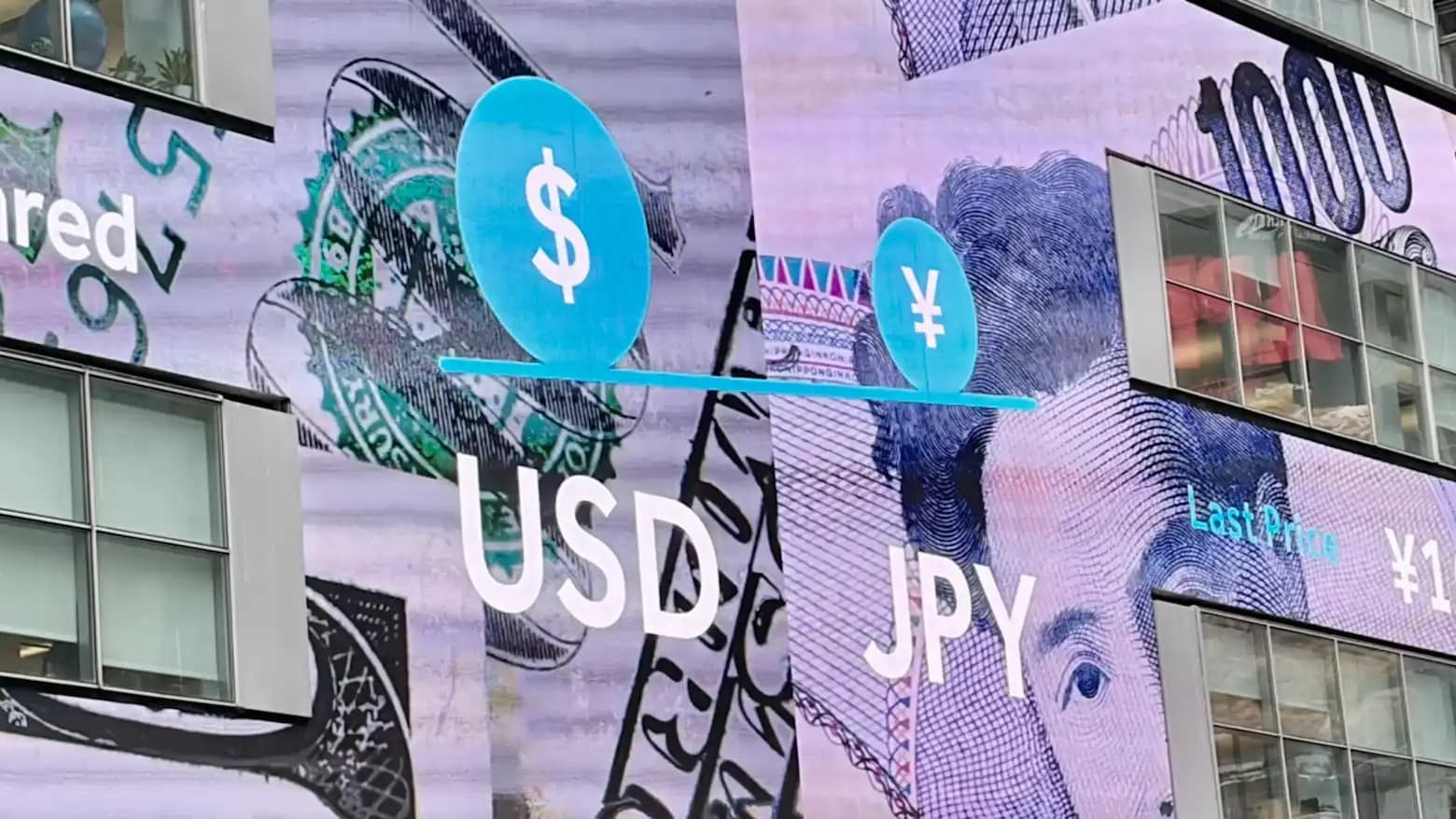
The yen surged to one hundred fifty five against the dollar on Thursday, its best level since August 3, as traders rushed to price in a faster pace of interest rate increases from the Bank of Japan. The currency moved four yen in a single trading day, an unusually sharp swing that reflected how quickly sentiment has shifted after months in which the yen struggled to hold any ground it gained.
The rally followed comments from Bank of Japan Governor Kazuo Ueda, who told reporters that rate hikes remain on the table at every policy meeting, including the one scheduled for later this month. Ueda said he wants to use the upcoming board discussion to weigh whether the central bank's economic scenario is becoming more likely to play out and whether the risks to prices are tilting further to the upside, language markets read as a strong signal that a move is close at hand.
Markets are almost certain a hike is coming
Pricing in interest rate futures now implies traders see roughly a ninety two percent chance the Bank of Japan raises rates at its policy meeting on September 17 and 18, a level of conviction that helps explain why the yen moved so sharply on Ueda's remarks alone rather than waiting for the meeting itself. That kind of near consensus leaves little room for the central bank to disappoint without triggering a sharp reversal in the other direction.
The case for tightening now rests on more than the currency alone. Policymakers have pointed to price pressures stemming from tension in the Middle East, robust global demand tied to the artificial intelligence buildout, and the weak yen itself, which raises the cost of imported energy and food and feeds directly back into the inflation picture the Bank of Japan is trying to manage.
Washington is pushing too
The pressure for higher Japanese rates has not been purely domestic. US Treasury Secretary Scott Bessent has publicly urged both Finance Minister Satsuki Katayama and Governor Ueda to move rates higher, adding an unusually direct diplomatic push to a decision that would normally be treated as an internal matter for the Bank of Japan's board alone. That kind of pressure from Washington complicates the optics for Tokyo even as it aligns with what many traders already expect the central bank to do on its own timeline.
A currency still recovering from a rough summer
Thursday's rally comes only weeks after Japan disclosed a record fifteen point three nine trillion yen spent defending the currency between late July and late August, on top of a rare joint intervention carried out with the United States on July 31. Even that combined effort left the yen struggling to hold gains for long, with the currency sliding back past the one hundred sixty level before this latest bout of rate hike speculation finally gave it firmer footing.
That history is part of why traders are treating this rally differently from earlier bounces. A currency move driven by expectations of an actual policy change carries more staying power than one propped up by direct market intervention, and at least one major bank has forecast the yen could climb as much as six percent further by the end of the year if the Bank of Japan follows through on the hikes markets are now pricing in.
What comes next
All eyes now turn to the September policy meeting, where a hike that markets have already largely priced in would need to be paired with clear signals about the pace of further tightening to keep the currency's momentum going. Anything short of that, from a smaller move than expected to a cautious tone from Ueda afterward, risks unwinding a chunk of Thursday's gains just as quickly as they arrived.