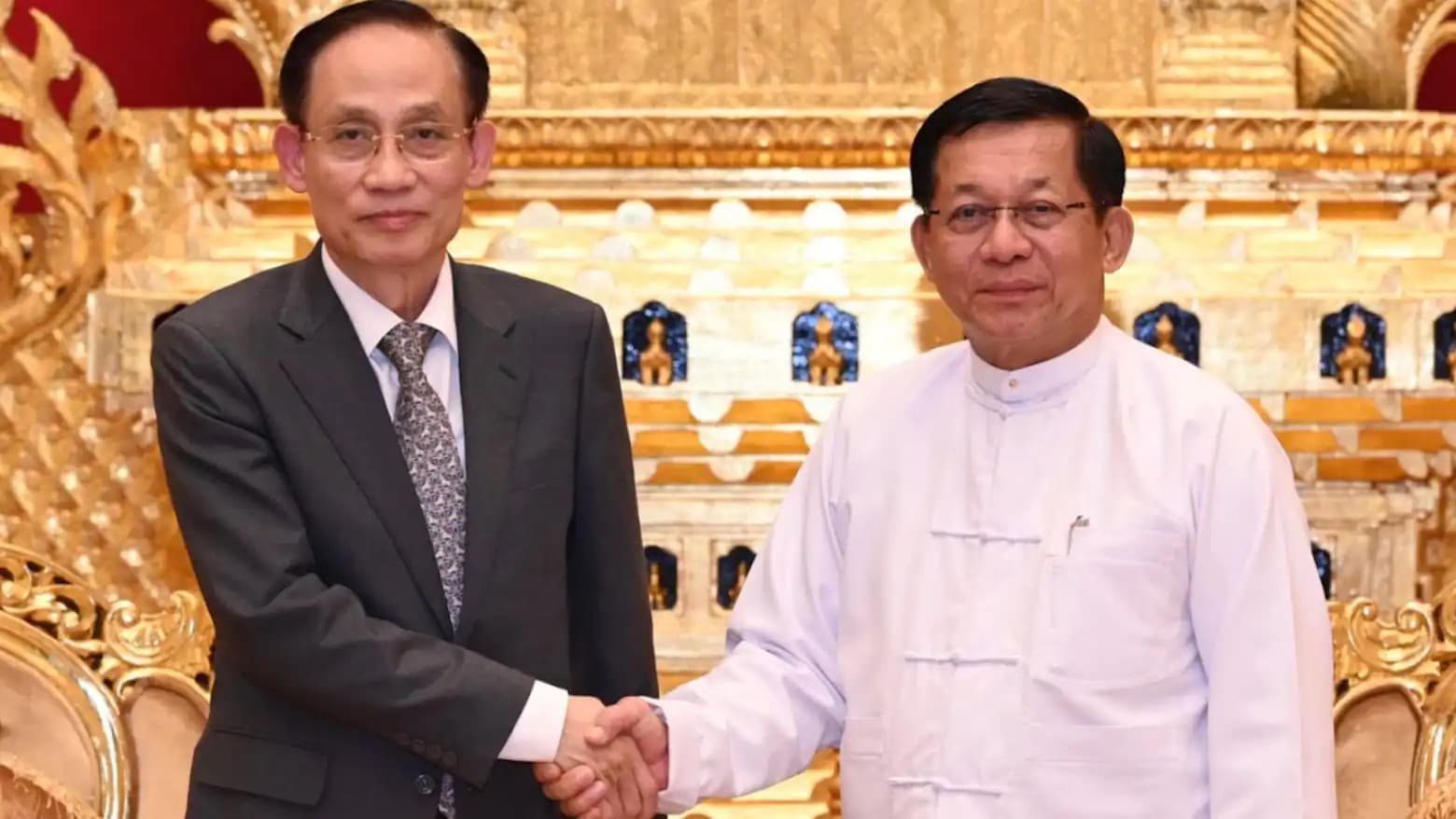
Vietnam sent its foreign minister to Myanmar this week for the first time since the country's military seized power in 2021, using the visit to set a new target of pushing annual bilateral trade up to one billion dollars. Foreign Minister Le Hoai Trung met with Myanmar President Min Aung Hlaing in Naypyidaw, a meeting that doubled as a signal that Hanoi is willing to keep working directly with the junta even as much of the international community keeps its distance.
The trade goal is an ambitious one given the recent trajectory of commerce between the two countries. Bilateral trade has fallen steadily from eight hundred and fifty three million dollars in 2020 down to five hundred and ninety million dollars last year, and stood at just three hundred and thirty five million dollars over the first half of this year. Hitting one billion dollars would require trade to climb by nearly seventy percent from where it stands now, a jump officials on both sides acknowledged will not happen without deliberate coordination.
A joint committee gets back to work
Trung's visit was built around co chairing the tenth meeting of the Vietnam Myanmar Joint Committee for Bilateral Cooperation, the main standing body the two governments use to review economic ties and iron out friction points. Coming out of that session, the two sides agreed to convene the eleventh meeting of their Joint Trade Sub Committee soon, a forum meant to work through the practical obstacles, from logistics bottlenecks to payment channels, that have been dragging on trade volumes even as both governments talk up cooperation.
Officials described the goal in terms of addressing difficulties and discussing concrete cooperation measures rather than simply restating a headline number, suggesting the two sides see the trade sub committee as the place where the real work of hitting the target will happen rather than in ceremonial visits alone.
Engagement despite the isolation
The visit lands at a moment when Myanmar remains largely cut off from the kind of high level diplomatic traffic it received before the coup. The military government has struggled to gain broader international legitimacy, with fellow ASEAN members divided over how much to engage a junta that continues to hold former leader Aung San Suu Kyi and has yet to deliver on promises of a return to civilian rule. Vietnam's willingness to send its top diplomat to Naypyidaw stands out against that backdrop, underscoring how Hanoi has generally favored continued engagement over isolation when dealing with fellow Southeast Asian states.
That approach reflects a broader pattern in Vietnamese foreign policy, which tends to prioritize steady economic ties and regional stability over taking a harder line on the internal politics of its neighbors. For Vietnam, deepening trade with Myanmar offers a chance to diversify export markets and secure a foothold in a economy that, despite its troubles, still represents meaningful long term potential once conditions stabilize.
What a billion dollars would actually take
Closing the gap between the current run rate and the new target will likely hinge on which sectors the two governments choose to prioritize as the trade sub committee gets back to work. Neither side detailed specific industries during the visit, but the scale of the ambition, effectively reversing years of decline within a relatively short window, suggests officials are betting on more than incremental gains in existing trade lines.
For now, the one billion dollar figure functions as much as a statement of political intent as an economic forecast. Whether it becomes a realistic milestone or another target that slips past its moment will depend on how quickly the promised committee meetings translate into the kind of logistics and payment fixes that have been holding bilateral trade back for years.