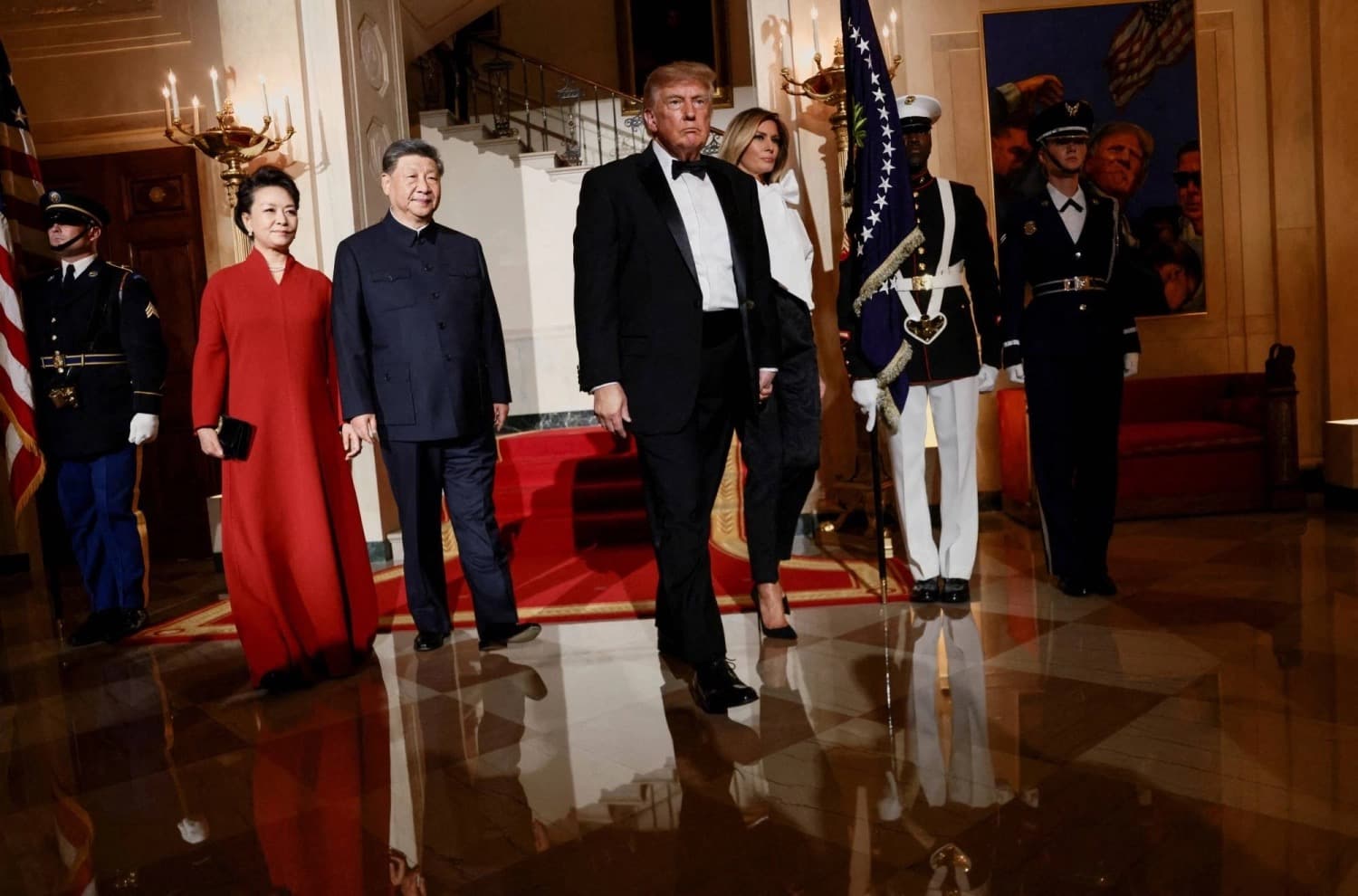
Chinese leader Xi Jinping arrived in Washington this week for his first state visit to the United States in more than a decade, greeted by President Trump at Joint Base Andrews before the two sat down at the White House for a summit meant to cover trade, Taiwan and artificial intelligence all at once. Trump welcomed Xi and his wife, Peng Liyuan, with a mix of ceremony and pointed historical framing that set an unusual tone for talks between two governments that spend most days sparring rather than reminiscing.
In his remarks at the arrival ceremony, Trump reached back eight decades, recalling that the two countries' militaries had fought on the same side during World War II and describing the relationship as built on common interests that had even made the two nations allies in that earlier conflict. It was a notable choice of framing for a summit convened amid ongoing friction over trade, technology and the future of Taiwan, using shared history as a counterweight to the list of present day disputes on the agenda.
Xi presses hardest on Taiwan
Whatever goodwill Trump's wartime framing was meant to generate, Xi used his own time in the meeting to press one of the summit's thorniest issues directly. According to China's state news agency Xinhua, Xi urged Trump to formally oppose Taiwanese independence and to handle the issue prudently, among the most explicit public appeals Xi has made for Washington to shift its stated position on the self governing island Beijing claims as its own territory.
That request sits at the center of the broader tension between the two governments, since Washington has long maintained a deliberately ambiguous stance on Taiwan rather than either endorsing independence or formally opposing it outright. Asking Trump to move toward explicit opposition would represent a meaningful shift in American policy, one Beijing has sought for years without success, making Xi's direct public appeal notable even if no actual change in the US position followed from it.
A crowded agenda, modest expectations
Trade and artificial intelligence rounded out the rest of the summit's agenda alongside Taiwan, though observers going in had generally expected the two day meeting to produce atmosphere and positioning more than concrete breakthroughs, given how entrenched both sides remain on the underlying disputes driving the broader US China rivalry. Trump capped the day by hosting a formal state dinner for Xi at the White House, a gesture of hospitality that stood in deliberate contrast to the harder edged substance of the closed door discussions earlier in the day.
Why the framing matters beyond the room
How each leader chose to characterize the relationship in public carries its own signal regardless of what was actually negotiated behind closed doors. Trump's invocation of a shared wartime past offered a softer public register even as his administration continues pressing China on trade and technology restrictions, while Xi's direct Taiwan appeal showed Beijing is willing to use even a ceremonially warm summit to advance its core territorial claim rather than setting the issue aside for friendlier optics.
The summit's real significance may only become clear in the weeks after, once both governments translate whatever tone was set in Washington into their actual policy positions on trade and Taiwan. For now, the gap between Trump's historical camaraderie and Xi's pointed request on Taiwan captures just how differently the two leaders are approaching the same relationship, even while sitting across the same table.