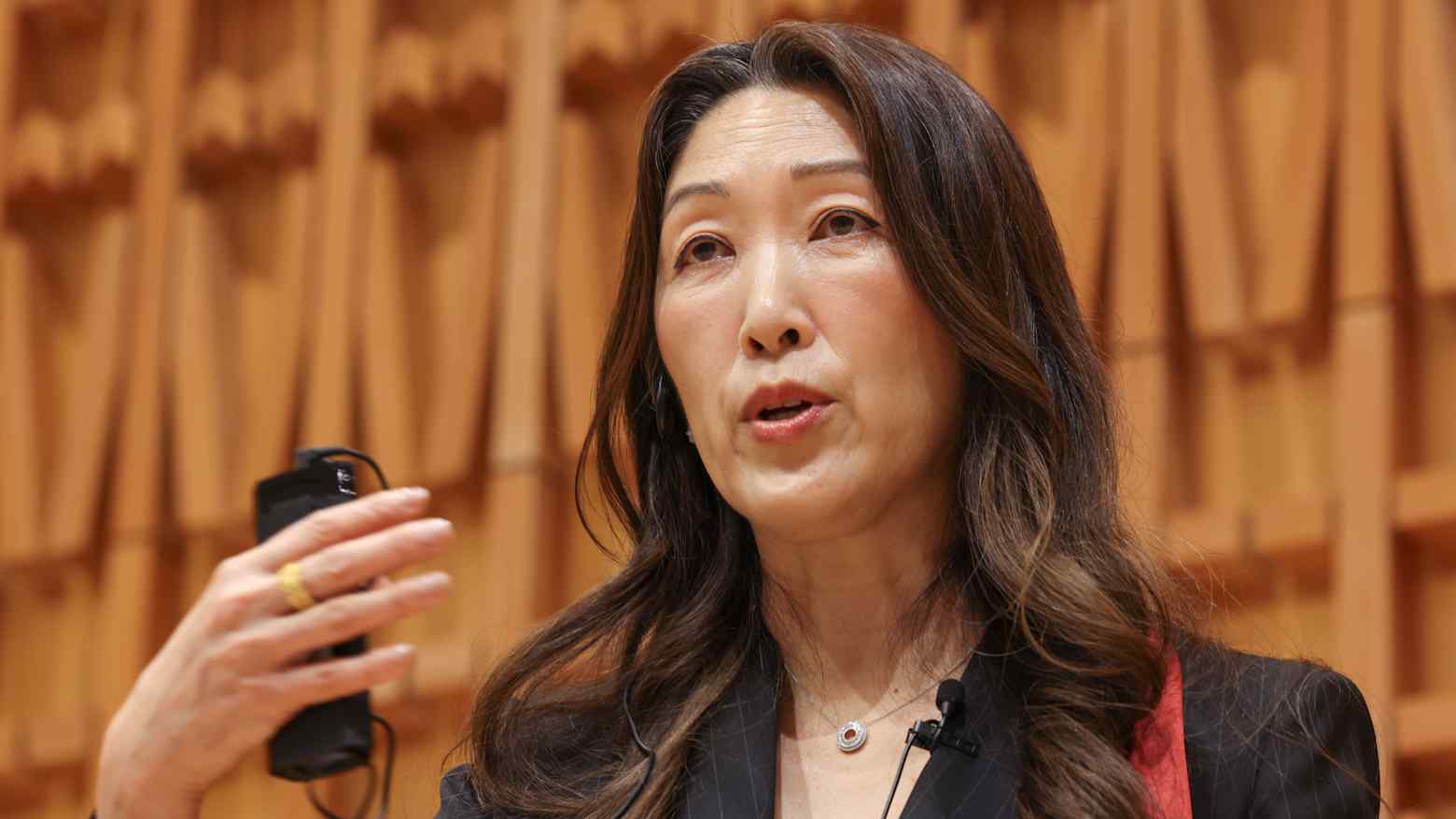
Takeda Pharmaceutical has a new chief executive, and she is betting that the future of one of Japan's oldest companies runs through artificial intelligence. Julie Kim, the first woman to lead the drugmaker, has made clear that AI will sit at the center of how she runs the business.
Kim takes over from Christophe Weber, the executive who spent years reshaping Takeda into a more global and more focused company. Her plan, in her own framing, is to build on those reforms rather than tear them up, using AI to make an already streamlined organization leaner and more efficient.
A milestone at the top
The appointment is notable on its own terms. Takeda is one of Japan's largest and most storied drugmakers, and corporate Japan has been slow to put women in its most senior roles. Kim becoming the company's first female chief executive is a marker of change in a business culture that has long lagged on that front.
She steps in at a moment when the pharmaceutical industry is rethinking how it operates. The old model of slow, expensive, and uncertain drug development is under pressure, and the companies that learn to work faster and smarter stand to pull ahead. That is the opening Kim appears determined to seize.
Why AI and why now
Drug discovery is, at its heart, a problem of sifting through enormous complexity to find the few molecules that might become medicines. It is exactly the kind of task where modern AI can help, by spotting patterns across vast datasets, narrowing the search, and shortening the long road from idea to treatment.
For a biopharma company, the appeal is twofold. AI can speed up research and raise the odds that a candidate succeeds, and it can trim the cost and friction of running a sprawling global operation. Kim's emphasis on lean and efficient management suggests she sees AI as a tool for both the laboratory and the back office.
Building on what came before
What stands out in Kim's approach is continuity. Rather than announce a dramatic break, she has framed her strategy as an extension of the structural changes already underway, now supercharged by technology. That is a quieter kind of ambition, less about reinvention and more about execution.
It is also a recognition that the hard work of integrating AI into a business as complex and regulated as pharmaceuticals is not a single announcement but a long process. Medicines still have to clear strict safety and efficacy bars, and no algorithm removes that responsibility. AI changes how the work gets done, not what is ultimately at stake.
The wider signal
Kim's bet reflects a broader shift across the industry, where AI has moved from a buzzword to a practical part of how drugs are discovered and developed. The question facing every large drugmaker is no longer whether to use these tools but how deeply to weave them into the core of the business.
By putting AI at the heart of her plan from day one, Takeda's new leader is staking out a clear position. In a field where the next breakthrough can take a decade and billions of dollars, she is wagering that the smartest use of technology will decide who finds it first.