
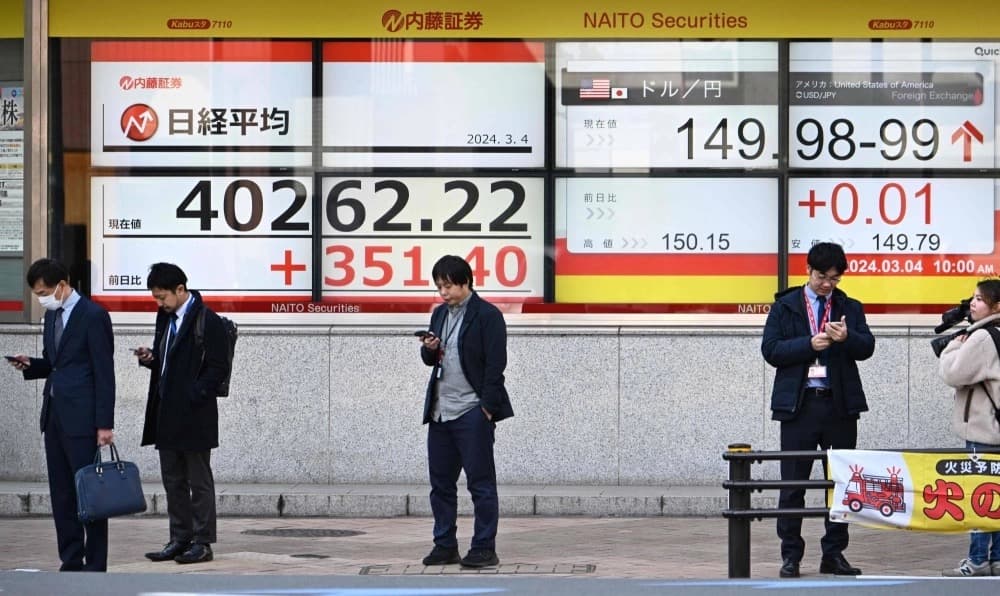
For decades the Japanese saver was a study in caution, parking cash in bank accounts that paid almost nothing and treating the stock market as a place for professionals and gamblers. That picture is being redrawn by the people least expected to hold the pen. Across the country, workers in their twenties and thirties are quietly skipping restaurant meals, postponing trips, and trimming the small luxuries of daily life so they can move more money into equities.
The clearest sign of the shift sits inside NISA, the tax-free investment scheme the government has pushed as a tool for ordinary households. By the middle of 2025, buyers aged 40 and under made up close to half of all NISA purchases, a share that would have seemed fanciful a decade ago. The accounts have become a fixture of young financial life, discussed in office chats and group messages the way property or salaries once were.
From the passbook to the portfolio
To understand why the change feels so striking, it helps to remember what came before. Post-war Japan built a savings culture around the humble bank deposit, a habit reinforced by years of falling prices that made cash feel like a sensible place to sit. When money holds its value and stocks look volatile, doing nothing is a rational choice. A whole generation grew up watching parents follow exactly that logic.
The logic has now broken down. Inflation has returned after a long absence, and a weaker yen has made imported goods and overseas travel noticeably more expensive. Cash that once felt safe is slowly losing ground, and younger workers can see it happening in their grocery bills and holiday budgets. The deposit that protected their parents now looks like a slow leak.
Fear of missing out, and fear of the future
Two very different emotions are pushing the same behavior. The first is the familiar pull of a rising market. As friends and colleagues talk up their gains and indexes climb, sitting on the sidelines starts to feel like a mistake with a running cost. Nobody wants to be the one who watched the boom from the outside.
The second emotion runs deeper and colder. Many young Japanese have quietly concluded that the state pension and lifetime employment their grandparents relied on will not be there in the same form for them. A shrinking, aging population makes the arithmetic of public retirement support hard to ignore. Faced with that, building a private cushion stops being an ambition and starts to feel like a duty.
For this generation, investing is less about getting rich and more about refusing to be caught unprepared.
The daily arithmetic of sacrifice
What makes the trend unusual is where the money is coming from. Rather than investing spare income, many are engineering the spare income into existence by cutting back on the ordinary pleasures of a young life. A cheaper lunch, a skipped weekend away, a subscription cancelled here and there, each small decision redirected into a monthly transfer. The sums look modest on their own, but repeated month after month and left to compound, they add up to a serious habit.
There is a cultural weight to this that goes beyond the numbers. Choosing a convenience store rice ball over a restaurant meal, or a staycation over a flight abroad, is a visible statement of priorities. It marks a break from the idea that a good salary should be enjoyed in the present, and a bet that patience today buys security later.
What it means for the market and the country
A steady stream of young money flowing into equities month after month is the kind of foundation many markets would envy. It brings a base of long-term, regular buyers who are less likely to bolt at the first wobble, and it deepens the pool of domestic capital that Japanese companies can draw on. Policymakers who spent years urging households to put idle savings to work are finally seeing the response they wanted.
The shift carries risks that the current calm can hide. Many of these investors have never lived through a serious downturn with their own money on the line, and a sharp fall could test convictions that have only ever been rewarded. There is also a harder question underneath the enthusiasm. When a generation feels it must sacrifice the present to fund a future the state may not provide, the growing investment habit is a sign of prudence and a sign of anxiety at the same time. For now, the young savers are choosing to act on both.