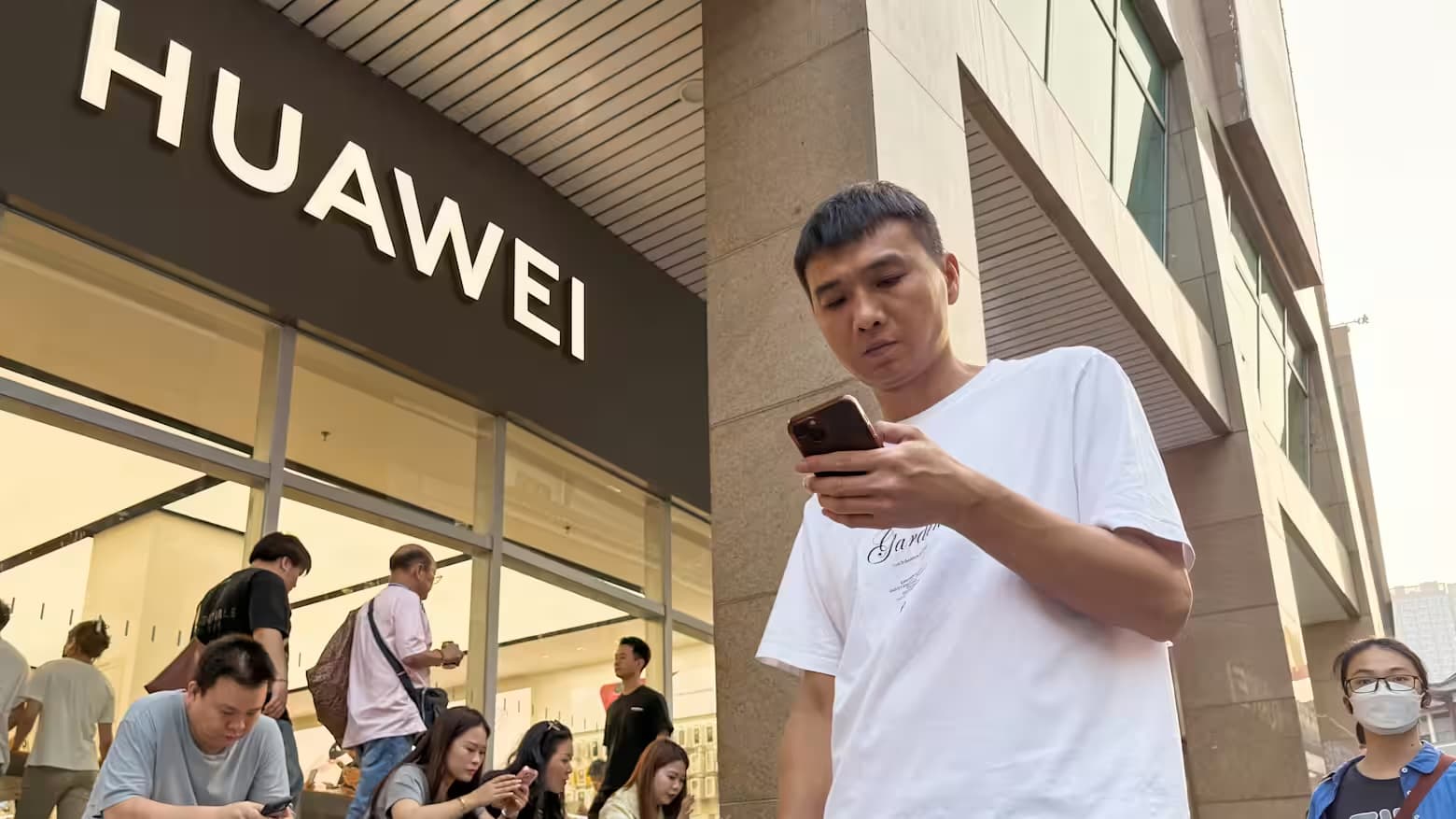
Not long ago the question around Huawei was whether it would survive as a phone maker at all. Cut off from American technology and Google's software, its handset business collapsed from the front rank of the global market to an afterthought. The story this year is strikingly different. According to people briefed on its plans, the company is aiming to lift smartphone shipments by more than 20 percent, pushing output toward 60 million units after selling fewer than 50 million last year.
That target would once have looked modest for a company that used to rival Samsung and Apple at the top of the industry. Set against the depths Huawei fell to, it reads as a statement of confidence. The firm believes the worst is behind it and is ready to press its recovery, even though the path forward runs straight into a supply problem it cannot fully control.
The memory bottleneck
The obstacle is memory. Every smartphone needs the chips that store data and let apps run, and right now those chips are in short supply and rising in price. The crunch is driven less by phones than by the boom in artificial intelligence, which has soaked up enormous quantities of advanced memory for data centers and left less to go around for consumer devices. When the world's server builders are bidding aggressively for the same components, a phone maker planning a big production increase feels the pinch first.
For Huawei the squeeze is doubly awkward. Sanctions already force it to source many components from within China or through narrow channels, so it has less room to maneuver than rivals who can buy freely on the open market. Scaling up to 60 million handsets while memory is scarce and dear means either paying more, securing supply early, or leaning harder on domestic chipmakers still working to match the quality and volume of established global suppliers.
A comeback built at home
What makes the ambition credible is how much of Huawei's revival has been engineered inside China. Blocked from Western chips and software, the company leaned on domestic foundries for its processors and built its own operating system to replace Android. The result is a phone that runs on a homegrown stack, insulated from the export controls that nearly killed the business. Each new flagship has been read at home as proof that the country can build advanced devices without foreign permission.
Every phone Huawei ships is now as much a political statement as a product, evidence that the sanctions did not have the last word.