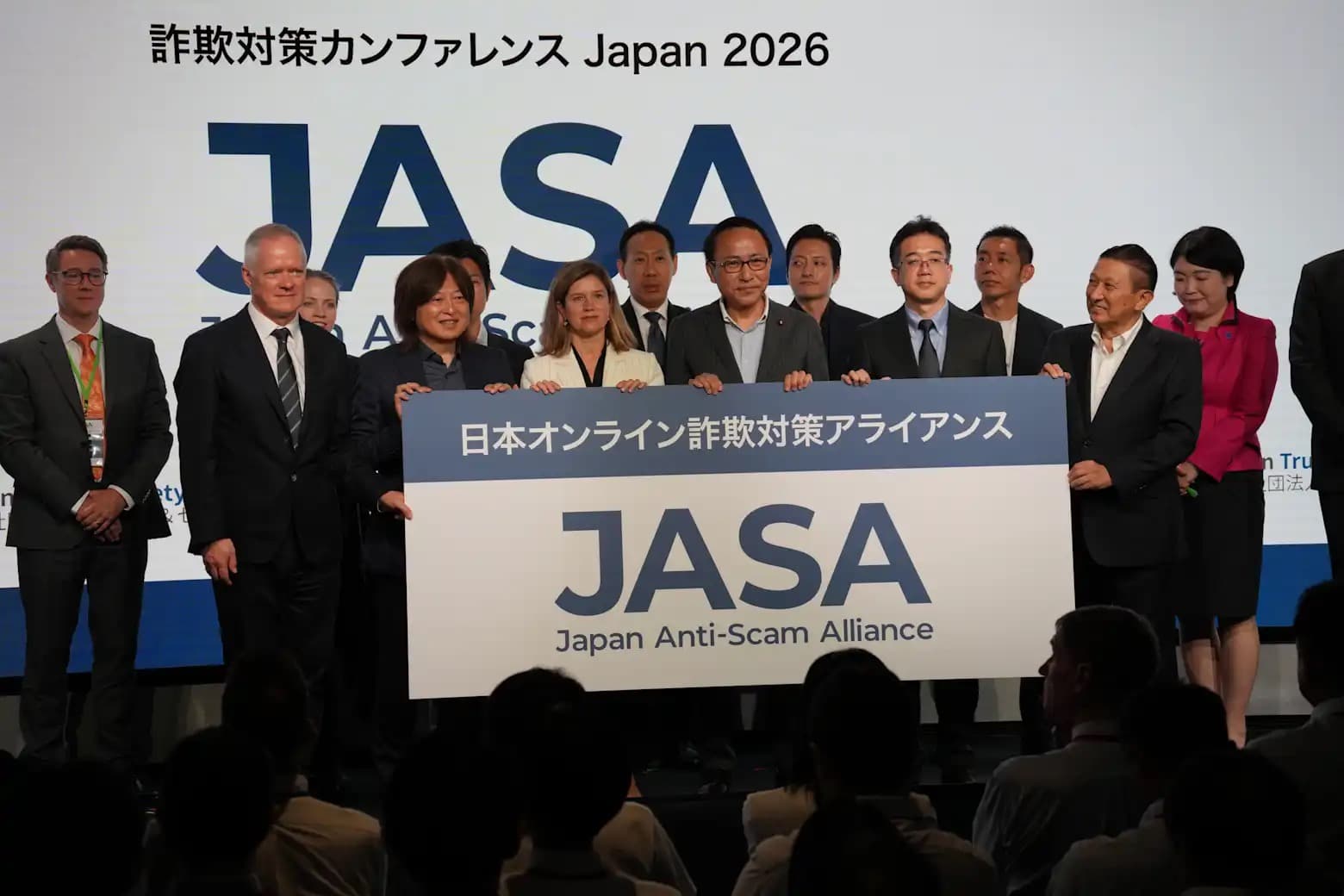
Some of the world's biggest technology companies stood alongside Japanese officials, banks and cybersecurity firms in Tokyo on Wednesday to formally launch the Japan Anti-Scam Alliance, a coalition built on the idea that dismantling today's fraud networks is bigger than any single platform can handle alone. Google, OpenAI, Meta and TikTok all appeared among the supporting partners named at the group's kickoff event, held at Google's Shibuya office.
The alliance, known by the shorthand JASA, grew out of groundwork laid earlier in the year by the Japan Trust and Safety Association, with Google Japan and the cybersecurity firm Trend Micro serving as the founding partners that got the effort off the ground. Meta and OpenAI Japan both signed on as supporting partners in the weeks leading up to the launch, joining a roster that also includes the dating platform Match Group and TikTok Japan.
A response to networks that cross borders and platforms
The coalition's target is not a single scam trend but an entire supply chain, one that increasingly stretches from criminal operations based in Cambodia, Myanmar and other Southeast Asian hubs to victims scrolling their phones in Japan. Investigators and researchers have watched that supply chain get faster and cheaper to run as scammers adopt generative AI tools to write convincing messages, clone voices and spin up fake investment platforms at a pace that manual fraud teams struggle to match.
Rather than leaving each company to fight that trend with its own trust and safety team, JASA is pitching itself as a neutral, non profit hub where platforms, telecom carriers, financial institutions, security vendors and government agencies can compare notes and coordinate takedowns. The group has described its ambition as tracking fraud from entry to exit, following a scam's path from the first contact with a victim through to the financial transaction that completes it, rather than treating each stage as a separate problem for a separate company.
Online fraud threats exceed what any single company can handle on its own.
That line, drawn from the alliance's own announcement, captures the logic behind pulling direct competitors into the same room. Meta pointed to its own track record as part of the pitch, noting that it removed more than one hundred and fifty nine million scam advertisements globally last year, a scale of enforcement the company says it wants to extend more deliberately into the Japanese market through coordination with JASA's other members.