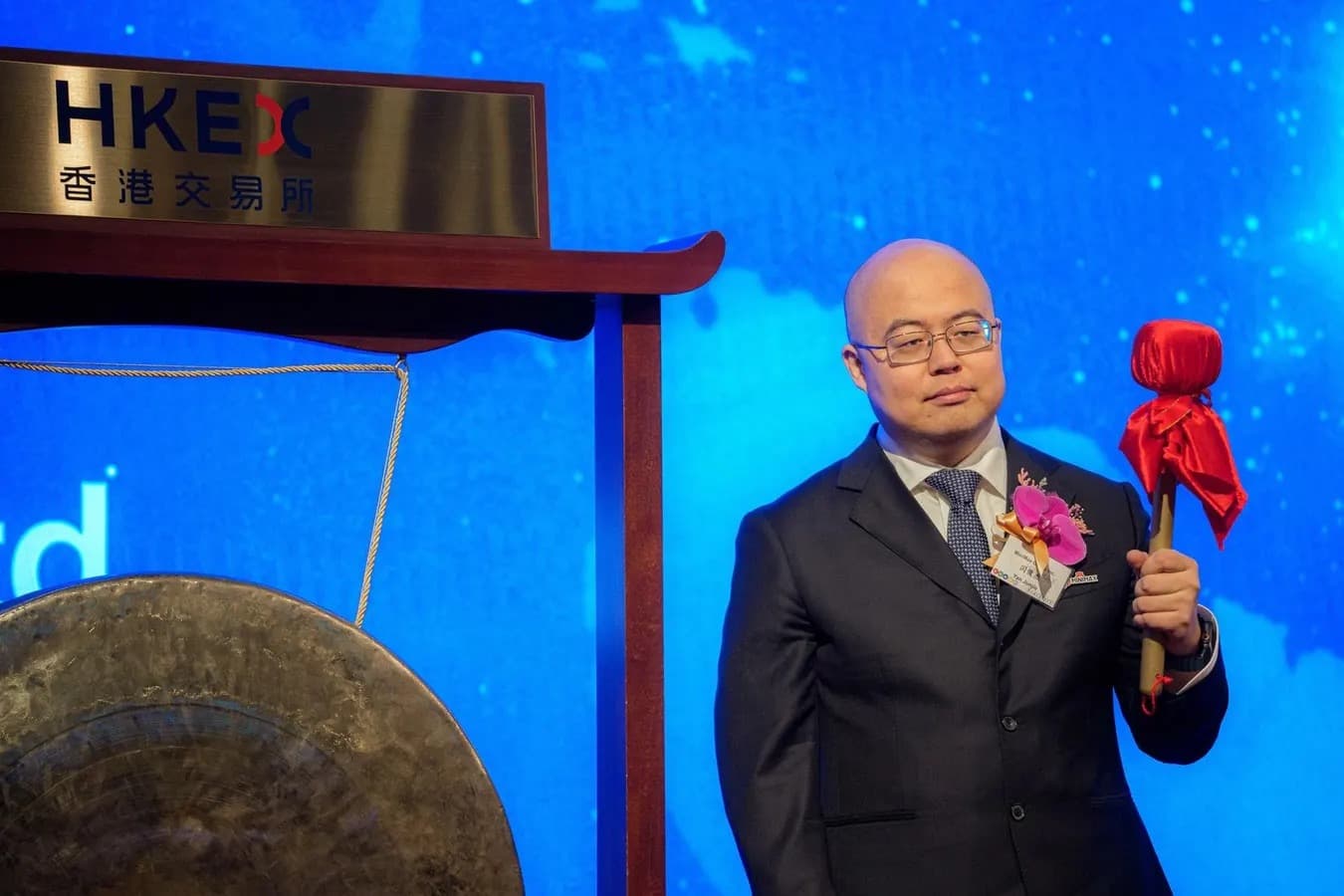
Six months ago Yan Junjie was the face of everything going right in Chinese artificial intelligence. His company, the large language model developer MiniMax, had just gone public in Hong Kong, its shares were climbing, and the 37 year old chairman sat atop a paper fortune that briefly topped 12 billion dollars. The listing looked like proof that a homegrown AI champion could raise real money and command a rich valuation on a global exchange.
The story now reads very differently. MiniMax shares have fallen more than 70 percent from the peak they reached in March, an unwind that has stripped roughly 39 billion dollars from the company's market value. Yan's own stake has shrunk in step, cutting his estimated wealth from around 12.6 billion dollars to something closer to 3.3 billion. Most of a fortune that took years to build on paper has evaporated in a matter of months.
How the froth built up
To see why the fall has been so steep, it helps to look at how the stock climbed in the first place. When MiniMax listed in January and raised about 619 million dollars, only a thin sliver of its shares actually traded freely. A small float means a small amount of buying can push a price a long way, and in the months after the debut the stock did exactly that, peaking near 1,330 Hong Kong dollars a share. The valuation that resulted was less a considered verdict on the business than a function of scarcity.
That kind of setup can flatter a company on the way up and punish it just as hard on the way down. A price built on a handful of tradeable shares has little ballast, and once sentiment turns there are few long term holders to steady it. The rise was fast, the base was narrow, and the reversal was always going to be violent if confidence slipped.
The lockup floodgate
The immediate trigger is a familiar one for newly listed companies. The lockup period that kept early backers from selling is expiring, releasing roughly 153.5 million additional shares into the market. In a single step the free float leaps from around 4 percent of the company to more than half, a transformation that hands cornerstone and pre-IPO investors the chance to cash out whenever they choose.
A stock that floated on scarcity now has to prove it can stand on demand alone.
That prospect alone is enough to pressure a share price. Traders who anticipate a wave of selling tend to step aside or sell first, which is part of why the decline gathered pace ahead of the deadline rather than after it. The real test is whether genuine buyers show up to absorb the new supply, or whether the early investors head for the exit at the same time.
A business under scrutiny
None of this would bite so hard if the underlying story were still accelerating. MiniMax has kept shipping, releasing a new model in June that it billed as reaching frontier level performance on specialized tasks. Alibaba, a cornerstone investor, has publicly backed the technology. Yet analysts have started to question whether the company is keeping pace, with some suggesting its momentum has stalled just as competitors sprint ahead.
The uncomfortable comparison is with Zhipu, a domestic rival whose shares have soared during the same stretch that MiniMax has cratered. In a field where investors are hunting for the eventual winners of China's AI race, being seen to fall behind is expensive. Capital chases the leader, and the gap in share performance between the two names has become a running commentary on which one the market believes in.
What the slide really tests
For Yan, the swing from 12 billion dollars to a fraction of that is a reminder of how much of a founder's wealth is a bet the market can revise overnight. On paper he remains a billionaire, and the stock is still marginally higher than where it began the year, a detail that captures just how frothy the peak really was. The fortune was never as solid as the headline number suggested.
The wider lesson reaches beyond one company. A wave of Chinese AI firms has rushed to list while enthusiasm runs high, often with slim floats that inflate early valuations. As their lockups expire one by one, each will face the same question MiniMax is facing now. Once the scarcity fades and the full share count hits the market, the price has to be justified by the business rather than the shortage. That is the reckoning arriving on Yan's doorstep first.