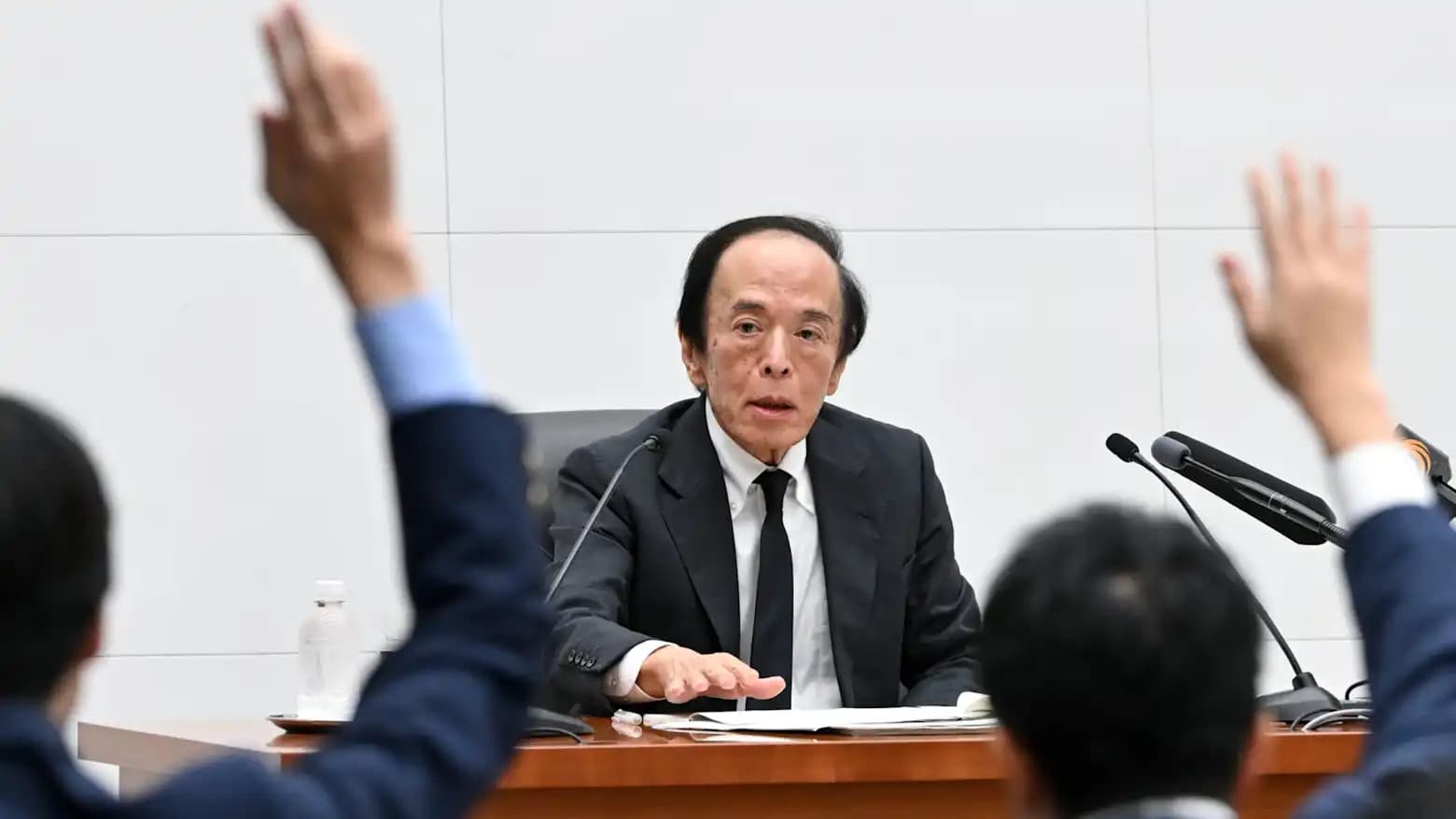
The Bank of Japan raised its benchmark interest rate to one point two five percent on Friday, a level not seen in three decades, confirming what markets had spent weeks treating as close to a certainty. Governor Kazuo Ueda framed the move in blunt terms after the two day board meeting concluded, telling reporters simply that our policy phase has changed, language that went further than his earlier hints and left little doubt the central bank sees itself entering a genuinely new stretch of monetary policy rather than making one more incremental adjustment.
The decision was not unanimous. Board members Toichiro Asada and Ayano Sato voted against the increase, producing a seven to two split that shows real disagreement persists inside the bank even as the broader direction of policy has become unmistakable. A dissent of that size is a reminder that not every policymaker shares Ueda's sense of urgency about the inflation risks driving the hike, even if the majority view carried the day.
Why Ueda says the danger has shifted
Ueda's justification centered on underlying inflation creeping close to the bank's two percent target, with growing concern that it could overshoot rather than settle there. He pointed to companies behaving more aggressively on wages and pricing than they have in years, a shift that tends to feed on itself once workers and businesses start expecting higher inflation to persist, along with rising medium and long term inflation expectations that make the central bank's job of anchoring prices considerably harder the longer it waits to act.
That combination, sticky underlying inflation plus a private sector increasingly willing to raise prices and wages in anticipation of more inflation, is precisely the scenario central banks find hardest to unwind once it takes hold. Ueda's language suggested the board sees this hike as necessary to keep that dynamic from becoming self reinforcing, rather than as a routine step in a slow, predictable tightening path.
The pace itself is the story
Just as notable as the size of the move is how quickly it arrived. Friday's increase came only three months after the Bank of Japan's previous hike, compressing an interval that had run around six months earlier in the tightening cycle that began in March 2024. That quickening cadence signals the board feels less able to wait between meetings than it did even a year ago, a shift in tempo that itself tells markets something about how seriously policymakers are treating the current inflation picture.
How markets responded
The yen strengthened following the announcement, extending a recovery that had already been building in the weeks leading up to the decision as traders priced in the hike well before it was confirmed. Yields on Japanese government bonds climbed as well, a predictable reaction to a central bank signaling it is prepared to keep raising rates rather than treating this move as a final adjustment before pausing.
With the rate now at a three decade high, attention turns to how the dissenting votes shape the debate heading into the bank's next meeting. A seven to two split gives the minority a real voice within the institution, and how loudly Asada and Sato continue pressing their objections may say as much about the path of future hikes as anything in Ueda's own public remarks.