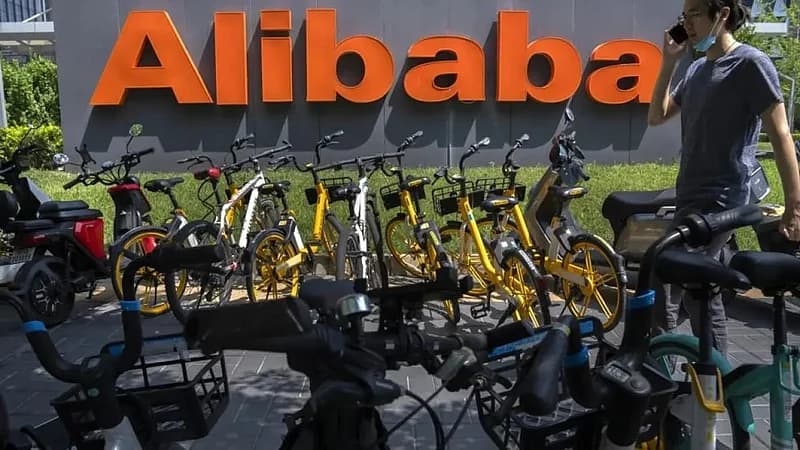
Alibaba Group is preparing to sell new shares in Hong Kong in a bid to raise roughly $10 billion, with the proceeds earmarked for accelerating the Chinese technology giant's artificial intelligence ambitions, according to Nikkei Asia. The planned share sale would rank among the largest equity raises by an Asian technology company in recent years and signals how aggressively Alibaba intends to compete in the global race to build out AI infrastructure.
The fundraising underscores the scale of capital that major technology firms now believe is required to remain competitive in AI. Training and running large language models, along with the cloud computing capacity needed to support them, demands enormous investment in data centers, specialized chips and power infrastructure. Alibaba, which operates one of China's largest cloud computing businesses, has positioned AI as central to its next phase of growth after years of slower expansion in its core e-commerce operations.
Choosing Hong Kong as the venue for the share sale is notable. The city has re-emerged as a preferred listing and fundraising hub for major Chinese companies, particularly those already listed in the United States that face ongoing uncertainty over their status on American exchanges. Alibaba has maintained a secondary listing in Hong Kong for several years, and tapping that market allows the company to raise substantial capital while reducing its reliance on U.S. capital markets amid persistent geopolitical friction between Washington and Beijing.
The scale of the raise, roughly $10 billion according to Nikkei Asia, reflects the intensity of the AI arms race now playing out among the world's largest technology firms. In the United States, companies such as Microsoft, Google, Amazon and Meta have committed tens of billions of dollars annually to AI infrastructure. Chinese firms, including Alibaba, Tencent and Baidu, have moved to match that pace, both to serve growing domestic demand for AI services and to avoid falling behind in a technology increasingly viewed as strategically vital.
Alibaba's cloud division, Alibaba Cloud, has been a particular focus of the company's AI strategy. The unit has rolled out a series of large language models and AI development tools aimed at enterprise customers, competing directly with offerings from rivals both inside and outside China. Strengthening that cloud infrastructure, including expanding data center capacity and securing access to advanced computing hardware, requires the kind of capital injection that a large share offering can provide relatively quickly compared with debt financing or reinvested earnings alone.
The move also comes against the backdrop of Alibaba's broader corporate turnaround. After a period of regulatory scrutiny in China that weighed heavily on its stock and reshaped its business practices, the company has worked to refocus on its most competitive segments, including cloud computing and AI, while trimming or restructuring less central operations. A successful capital raise of this size would suggest renewed investor confidence in that strategy and in Alibaba's ability to translate AI investment into future revenue growth.
For shareholders, a large new share issuance typically raises questions about dilution, since existing investors' proportional ownership decreases as new shares enter the market. Companies pursuing such raises generally argue that the long-term growth opportunity, in this case AI-driven cloud and enterprise services, justifies the near-term dilution. Markets will likely watch closely how Alibaba articulates its spending plans and expected returns on the new capital in order to gauge whether investors view the tradeoff favorably.
The raise also has implications beyond Alibaba itself. It could set a benchmark for how other major Chinese technology companies approach AI financing, potentially encouraging peers to pursue similarly sized equity raises in Hong Kong rather than other markets. It may also bolster Hong Kong's standing as a global fundraising center at a time when the city has been competing to reclaim some of the listing activity that shifted toward New York and mainland Chinese exchanges in previous years.
Chinese regulators have generally supported large domestic tech companies expanding their AI capabilities, viewing the sector as important to national technological self-sufficiency, particularly as export controls from the United States have restricted access to some advanced semiconductor technology. Alibaba's fundraising plan, while a corporate financial decision, also fits within this broader national push to ensure Chinese firms have the resources to develop competitive AI systems despite hardware constraints.
Investors and analysts will be watching for further details on how Alibaba plans to allocate the capital, including the balance between data center construction, chip procurement, research and development, and potential partnerships or acquisitions. The final size and pricing of the share sale could also shift depending on market conditions and investor demand in the weeks ahead.
As the AI investment race continues to intensify globally, Alibaba's Hong Kong share sale illustrates the scale of capital that even well-established technology giants now feel compelled to raise to keep pace. The outcome of the offering, and how effectively Alibaba deploys the proceeds, will offer an early signal of how sustainable this new wave of AI-driven capital spending proves to be across the technology sector.