Vladimir Putin has finally walked on ground that Japan has spent eight decades claiming as its own. On Thursday the Russian president made his first ever visit to the Kuril Islands, the Pacific chain seized by the Soviet Union in the closing days of the Second World War, setting foot on the island Russia calls Iturup and Japan knows as Etorofu. For a dispute defined by symbolism, the sight of the Russian leader touring the islands in person was about as pointed a symbol as could be devised.
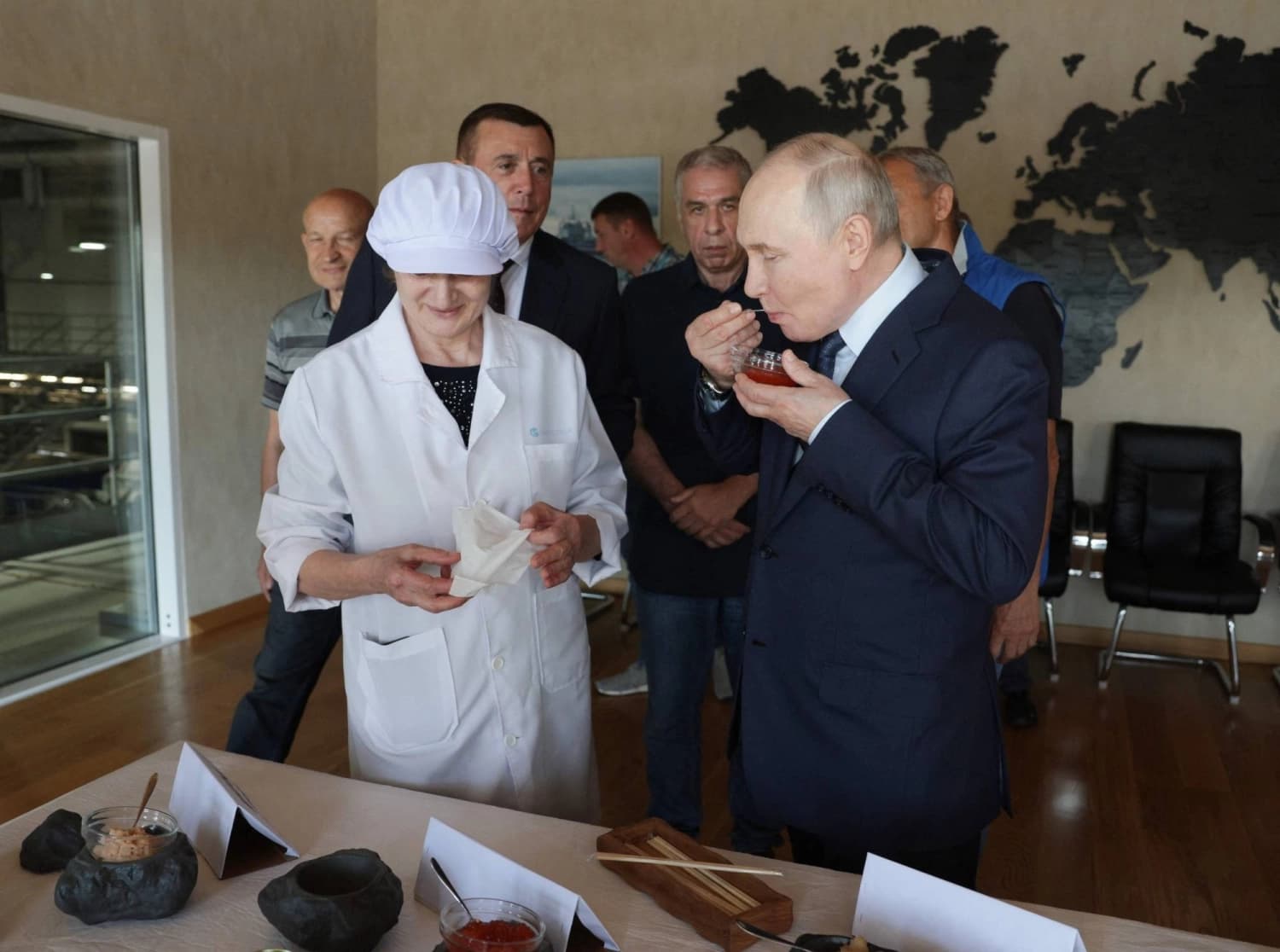
The visit itself was cast in the ordinary language of a domestic tour. Putin stopped by a fish processing plant, where he sampled local seafood, looked in on a hospital and a school, and met the governor of the wider Sakhalin region that administers the islands. Presented as a routine trip to a far-flung corner of Russia, the itinerary carried an unmistakable subtext, which was that Moscow treats these islands as fully and unremarkably Russian, no different from anywhere else under its flag.
Tokyo's swift and angry response
Japan reacted with the fury the moment demanded. The Foreign Ministry declared that it strongly protested the visit, and the government summoned the Russian ambassador to hear that objection in person, the diplomatic equivalent of a raised voice. Prime Minister Sanae Takaichi restated Japan's bedrock position, insisting that the islands are an inherent part of Japanese territory both historically and under international law, and framing the trip as an affront to that claim.
The strength of the reaction reflects how much these islands mean to Japan, far out of proportion to their size or population. To many Japanese they are not a remote outpost but a piece of the nation held under foreign control, a wound left open since 1945. A visit by the Russian head of state, walking the streets and shaking hands as if the question were long settled, strikes directly at that sense of grievance and forces Tokyo to respond or appear to acquiesce.
A quarrel rooted in the war's last days
The dispute reaches back to the final chaotic days of the Second World War, when Soviet forces moved into the islands as Japan was surrendering. Japan lays claim to the four southernmost of them, the group it calls the Northern Territories, comprising Etorofu, Kunashiri, Shikotan and the Habomai islets. Russia has held them ever since, settling them, garrisoning them and folding them into its administrative structure, while rejecting the idea that their status is genuinely open to negotiation.
That unresolved argument has left a remarkable gap in the two countries' relations. Japan and Russia have never signed a formal treaty to end their wartime hostilities, because the islands stand in the way, and every attempt to bridge the divide has foundered on the same rock. Decades of talks, warm summits and hopeful declarations have failed to move the border a single meter, and the two capitals remain, in the strictest legal sense, without a peace between them.
Eighty years after the guns fell silent, Japan and Russia still have no peace treaty, and four small islands are the reason why.
A relationship already in the deep freeze
Whatever slim hope once existed for compromise has all but vanished in recent years. Russia's war in Ukraine pushed Japan firmly into the camp of nations imposing sanctions on Moscow, and in response the Kremlin walked away from what remained of the territorial talks and hardened its posture on the islands. Moscow has since made clear that Tokyo should not expect any swift movement, effectively slamming a door that was already barely ajar.
Against that backdrop, Putin's visit reads less as a provocation out of nowhere than as a punctuation mark on a policy already set. By showing up in person, he underlines that Russia intends to hold the islands indefinitely and feels no need to soften that message for Japanese sensibilities. For a leadership in Moscow keen to project strength and permanence, planting the president's feet on the disputed soil is a low-cost way to make the point unmistakable.
What it means going forward
For Takaichi, the episode is an early test of how her government handles a neighbor that has grown openly indifferent to Japanese objections. Protesting is necessary, but protest alone changes nothing on the ground, and Tokyo has few levers that can compel Moscow to reconsider while the war in Ukraine keeps relations frozen. The challenge is to defend the principle of the claim without pretending that a breakthrough is anywhere in sight.
The likeliest outcome is that the islands recede once more into the background, a grievance nursed rather than resolved, until the next flashpoint brings them back into the headlines. Putin has demonstrated that he can visit them whenever he chooses and that Japan can do little but object. That imbalance is the uncomfortable reality Tokyo now confronts, and no amount of protest can disguise how far the prospect of getting the Northern Territories back has slipped from reach.