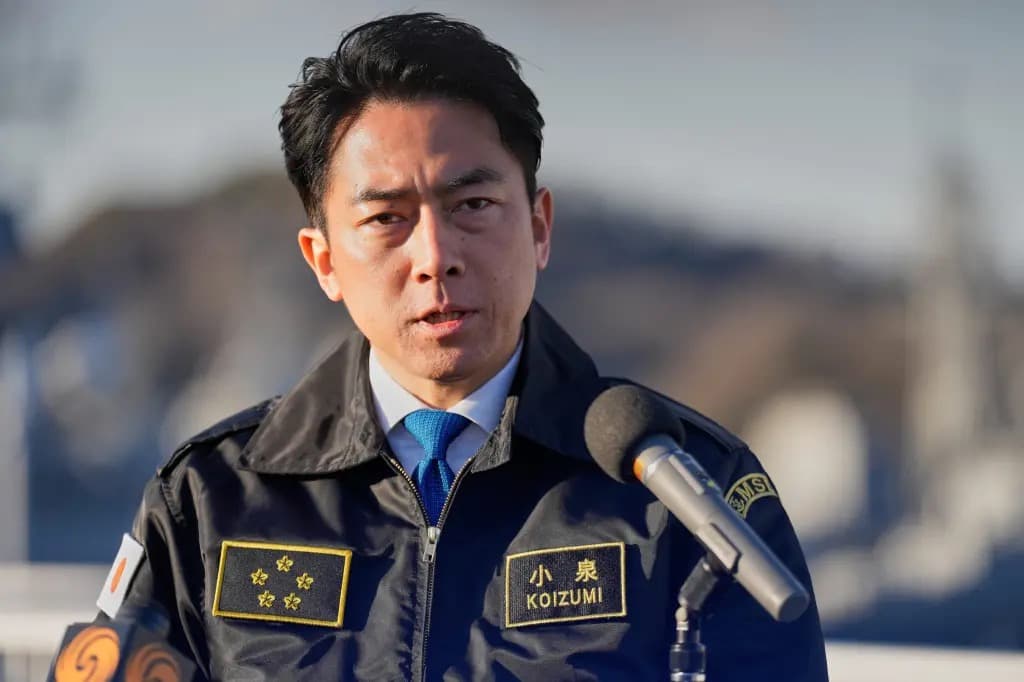
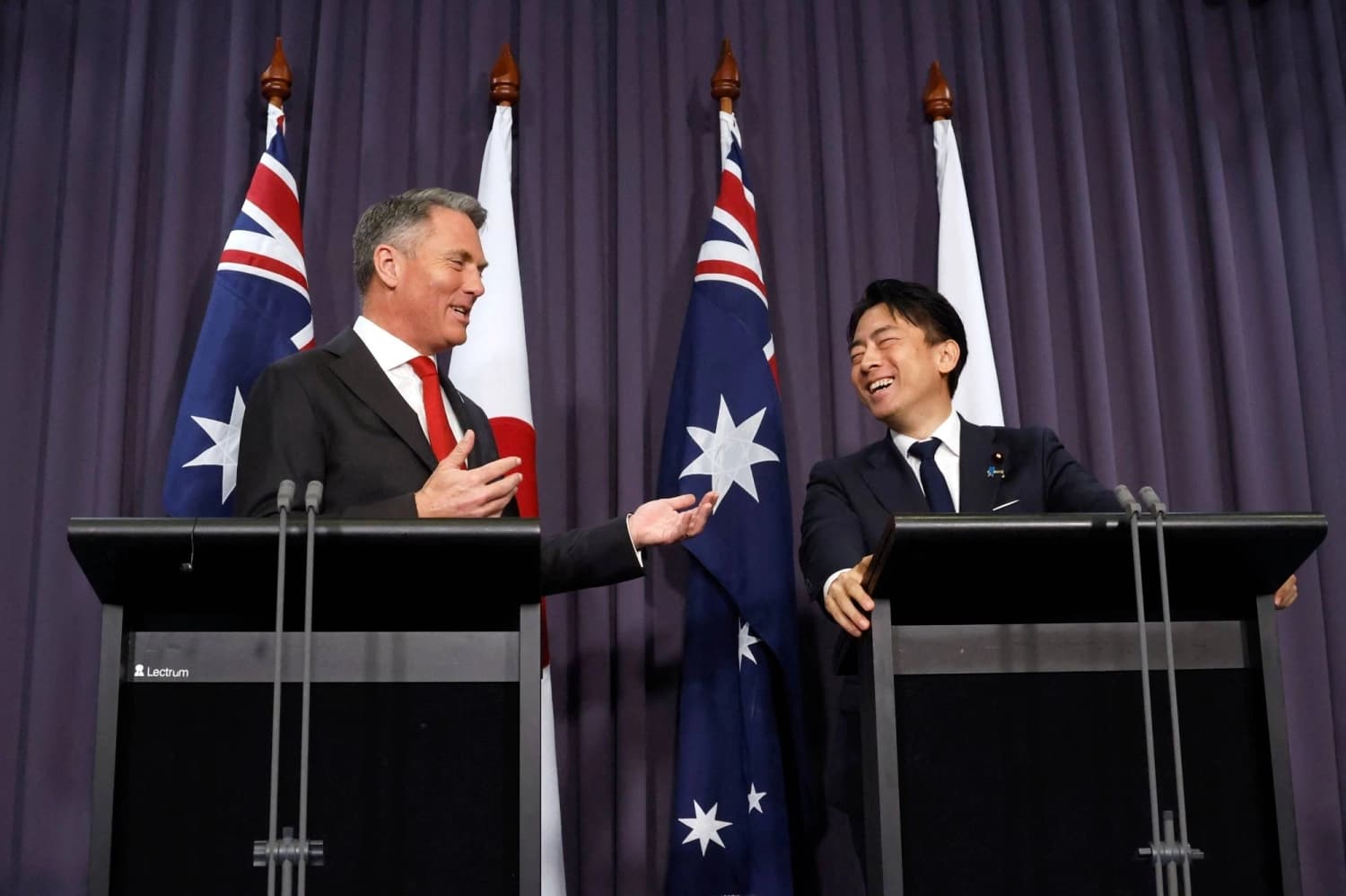
Japan's defense minister, Shinjiro Koizumi, has arrived in Australia for a meeting that would have been almost unimaginable a generation ago. Sitting alongside his Australian counterpart, Deputy Prime Minister Richard Marles, he is there to advance a defense partnership anchored by the sale of Japanese warships to the Australian navy. The warmth on display between the two men reflects a relationship that has moved from cautious friendship to something close to a strategic embrace.
The centerpiece of that relationship is a deal struck earlier in the year, when Australia chose Japan to supply a fleet of upgraded Mogami-class frigates, with the first three ships leading a planned run of eleven. For Japan the agreement was historic, ranking as the largest defense export in its postwar era and marking a decisive break from decades of self-imposed restraint on selling weapons abroad. Koizumi's visit is meant to keep that landmark program on track and to build on the momentum it created.
A country that once would not sell arms
To understand why the trip matters, it helps to remember where Japan started. For most of the postwar period the country held itself to a strict policy against exporting weapons, a stance rooted in the pacifism written into its national identity after 1945. Selling frigates to a foreign navy would once have been politically off limits, and the fact that Tokyo can now do so openly, and celebrate it, shows how profoundly the mood has shifted as the region around Japan has grown more dangerous.
The frigate deal turns that shift into steel. It does not merely hand Australia some ships but plants Japan firmly in the global defense market, proving it can compete with the established arms exporters of Europe and elsewhere. Winning a contract of this size against seasoned rivals gives Japanese industry a credibility it lacked, and it opens the door to a future in which defense exports become a normal part of how the country projects influence.
Why Australia chose Japan
For Canberra the choice was about far more than the specifications of a warship. Picking Japan as a supplier ties the two militaries together in the long and intimate way that major weapons programs demand, since the ships must be maintained, upgraded and operated in step for decades to come. That kind of dependency is not entered into lightly, and by choosing Japan, Australia signaled that it sees Tokyo as a partner it wants to be bound to for the long haul.
There is an industrial dimension as well. While the first vessels are to come from Japan, the program is designed to bring work and know-how to Australia over time, building local capacity rather than simply importing finished hulls. That blend of speed and self-reliance suited Canberra's needs, letting it field capable ships quickly while nurturing an industry at home, and it gave both governments a stake in seeing the partnership succeed.
Weapons deals of this size are not transactions but marriages. The two navies will be tied together long after the politicians who signed the papers have moved on.
The shadow over the region
None of this is happening in a vacuum. Both Japan and Australia are responding to the same underlying anxiety, a China whose military power and assertiveness have grown rapidly and reshaped the strategic map of the Indo-Pacific. Neither country can match that weight alone, and both have concluded that their security now depends on knitting themselves ever more tightly to like-minded partners. The frigate deal is one thread in a much larger web of cooperation being woven across the region.
That web is expanding in Koizumi's very itinerary. Beyond his talks with Marles, the visit is expected to include discussions with New Zealand about extending the same class of frigate to its navy, turning a bilateral deal into the seed of a wider network. Pulling New Zealand into the arrangement would deepen the alignment among the region's democracies and give Japan yet another partner tied to its defense industry.
A partnership still to be proven
For all the optimism, the hard work lies ahead. Building and delivering a fleet of warships across two countries is an enormously complex undertaking, and Japan is still a relative newcomer to the business of exporting major weapons systems. Programs of this scale are prone to delays and cost overruns even for experienced exporters, and any stumble would test the goodwill on show at this week's meeting. The handshake is the easy part, and the decades of delivery that follow are the real measure of success.
Yet the direction is clear and unlikely to reverse. Japan and Australia have decided that their futures are linked, and the frigate program has become the concrete expression of that decision. Koizumi's presence in Australia is a statement that Tokyo intends to be not just a customer or a bystander in the region's security but an active shaper of it. For a country that spent decades keeping its distance from the arms trade, that is a remarkable place to have arrived, and the voyage has only just begun.